CityVoiceCLE Local updates. Clear action.

Ohio voters reject replacing troubled mapmaking system with citizen-led redistricting commission

COLUMBUS, Ohio (AP) — Ohio voters rejected a constitutional amendment Tuesday that would have established a citizen-led redistricting commission to replace an existing mapmaking system that repeatedly produced unconstitutional maps.

The outcome marked a defeat for the group Citizens Not Politicians, a bipartisan coalition that proposed Issue 1 as an alternative after seven straight sets of legislative and congressional maps produced under the existing setup were found to be unconstitutionally gerrymandered to favor Republicans.

Proponents believe they were stymied by the approved ballot language, which described the new commission as being “required to gerrymander” district boundaries — though the amendment stated the opposite was the case.

The campaign sued the GOP-controlled Ohio Ballot Board over it, telling the Ohio Supreme Court it may have been “the most biased, inaccurate, deceptive, and unconstitutional” language the state has ever seen. The court’s Republican majority voted 4-3 to let the wording stand.

“In analyzing the vote tonight, it is clear that the millions of Ohioans who voted yes want to end gerrymandering,” former Ohio Chief Justice Maureen O’Connor, a leading force behind the campaign, said in a statement. “And it is also clear that those who voted no thought that they were voting to end gerrymandering.”

She said the coalition’s work this year “laid a powerful foundation” and that redistricting reformers “will continue to push for an Ohio where every vote truly counts and where transparency and fairness guide our electoral process.”

The well-financed campaign also faced opposition from GOP officials, including Gov. Mike DeWine and legislative leaders, who argued that the new commission was flawed and unaccountable. DeWine has vowed to pursue his own alternative next year.

Former President Donald Trump, who won the state for the third time Tuesday, also appeared in ads urging Ohioans to vote against the measure.

Ohio Senate President Matt Huffman said voters protected their state over outside interest groups that financially supported Issue 1.

“Voters recognized that establishing an unelected, unaccountable fourth branch of government under Issue 1 was a very bad idea,” he said in a statement. “Ohio voters protected their power and their voice by defeating a well financed and secretly funded attack on democracy.”

Legislative Democrats blasted the process Tuesday.

“Power-hungry Republican politicians deceived voters, put deceptive language on the ballot, and outright lied to keep a grasp on their artificial legislative supermajorities,” Senate Democratic Leader Nickie Antonio said in a statement. “While I am devastated by this loss, I will continue to fight for fair maps alongside the many Ohioans — Republicans, independents, and Democrats alike — who demand better from our state government. The fight for fair maps is far from over.”

The governor contended that the mapmaking rules laid out in Issue 1 would divide communities and mandate outcomes that fit “the classic definition of gerrymandering.” He took specific aim at the proposal’s requirement for partisan proportionality in the maps.

DeWine said Iowa’s system — in which mapmakers are prohibited from consulting past election results or protecting individual lawmakers — would remove politics from the process.

Issue 1 supporters disagreed, pointing out that Iowa state lawmakers have the final say on political district maps in that state — the exact scenario their plan was designed to avoid. Maureen O’Connor, the retired Ohio chief justice who championed Issue 1, accused DeWine of spreading disinformation about the ballot measure.

The fall ballot proposal called for replacing the Ohio Redistricting Commission, made up of the governor, auditor, secretary of state and the four legislative leaders, with an independent body made up of ordinary citizens. The new panel’s members would have been diversified by party affiliation and geography.

In a statement, the Ohio Chamber of Commerce said it was pleased that voters recognized the consequences of Issue 1 and rejected it.

“We agree that the current redistricting system is flawed,” the business group said. “However, this constitutional amendment would have only created larger problems, like raising the cost of doing business in our state and making us less economically competitive.”

The chamber pledged to work with state legislators and elected officials on “the right solution for all.”
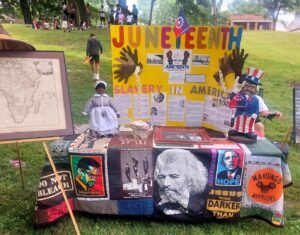
Juneteenth 2024 at the African American Cultural Garden

By Obie Shelton

The heat was on, but the rain held off as more than 200 people visited the African American Cultural Garden to celebrate the Juneteenth holiday. 

“This is what it’s all about—community,” said organizer Beverly Lloyd. 

Martin Luther King Boulevard was closed off between Superior and St. Clair from noon until 4 p.m. to give full access to the celebration as the temperature soared to 90 degrees.

Live music was provided by the band Loladé. The band features David Clark, Jerrell White, Sha’Nyla Curry, and Lolade’ Mccants. 

The Cleveland Cavaliers sponsored a talent show competition of young people performing songs, dance, and spoken word. Cash prizes were given to winners. A dramatic presentation reenacted the day enslaved people in Galveston, Texas, were informed by a Union soldier that slavery had ended in the U.S.

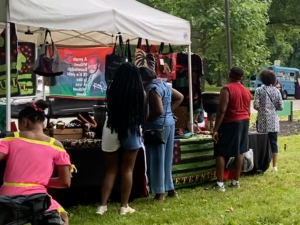
Free food was served in the tradition of Juneteenth. Barbecued chicken, Jollof rice along with red beans and rice were served with watermelon and hibiscus red tea. The red-colored food is recognized as symbolizing the bloody struggle, sacrifice, and resilience of enslaved Africans in America. Vendors sold African-themed clothing and artifacts while books were given away to children who listened to storytellers.
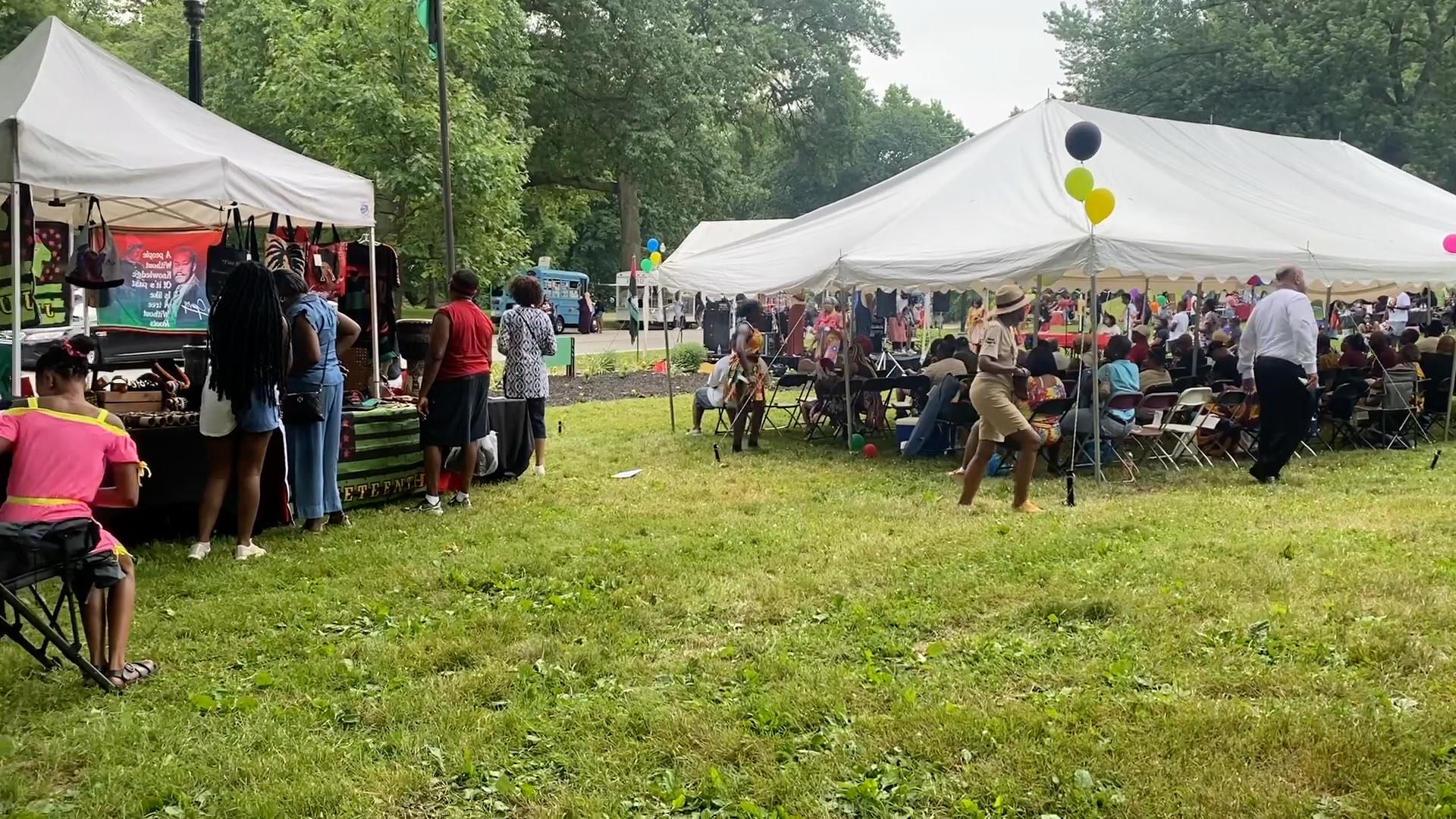

The Cultural Garden’s executive director Obie Shelton urged those in attendance to spread the word about the importance of raising the rest of the money to complete the garden. “We can each contribute,” he said. “It’s not about waiting for someone else to do it for us.” 

The garden’s fundraising campaign has secured almost half of the $4 million needed to complete the dramatic granite and sandstone design that will stretch down the hill from Wheelock Avenue to Martin Luther King Boulevard. “Let’s finish it,” Shelton said.

The African American Garden site was dedicated in 1977. The completed African American Cultural garden will convey the journey of the African American community from the past through the present and into the future.

Cleveland’s IT Infrastructure, Backup and Recovery Strategies Falls Short

By Ron Calhoun

The City of Cleveland’s efforts to establish a resilient information technolgy (IT) infrastructure, as promised by Mayor Justin Bibb during his campaign bid, have faced scrutiny. Shortcomings in utilizing American Rescue Plan Act – or ARPA – infrastructure funds and addressing an outdated system have come to the surface. The recent spotlight on the City’s technological infrastructure has sparked discussions about essential practices for ensuring data protection and business continuity.

One crucial aspect highlighted by experts is the need for comprehensive planning and design. A team of professionals with a deep understanding of business requirements is essential to creating a scalable infrastructure that can adapt to the City’s evolving needs. This includes considerations of network topology, hardware requirements, and data storage to build a solid foundation for future growth.

Security remains paramount in any IT infrastructure strategy. Prioritizing cybersecurity measures, including encryption, access controls, and intrusion detection systems are crucial for safeguarding sensitive data and infrastructure against cyber threats.

Additionally, collaboration and partnerships with public and private sector organizations play a vital role in leveraging resources and expertise for IT infrastructure projects. By engaging in knowledge-sharing and best practices exchange, Cleveland can drive innovation and continuous improvement in its technological initiatives.

However, recent events have exposed vulnerabilities in Cleveland’s backup and recovery strategy, raising questions about its effectiveness. Infrastructure experts stress the importance of a comprehensive backup and recovery approach, including thorough assessments of data assets, redundancy measures, and regular testing of recovery procedures.

A resilient backup and recovery strategy should prioritize redundancy and geographic diversity to mitigate the risk of data loss and downtime during disasters or emergencies. Encryption of backup data and regular testing of recovery procedures are essential for ensuring the reliability and effectiveness of the strategy.

Incorporating disaster recovery plans and ensuring compliance with industry regulations are also crucial aspects of a robust IT infrastructure strategy. By adhering to these guidelines and continuously improving their approach, Cleveland could have built a resilient IT infrastructure that supports economic growth and enhances the quality of life for its residents by now.

The Cleveland Clinic could have been a valuable resource in accomplishing a vigorous IT infrastructure strategy. The two-year, $170 million Cleveland Clinic Data Center project was completed in 2014. This confirms that a brand new system for the City of Cleveland was and is not unreachable for the Bibb administration.

Ron Calhoun is the publisher for The Cleveland Observer. He is also a retired IT professional with 15 years of experience. He emphasizes the importance of effective backup and recovery strategies in minimizing data loss and operational disruptions.

Sneakers Ball in Slavic Village


Story & photos by Mark Silverberg.

The Stella Walsh Recreation Center was buzzing with excitement on April 19, as its first Sneaker Ball brought together fathers, children, and community members for a night of celebration and bonding.

Organized as a tribute to the neighborhood’s fathers and their vital role in the community, the Sneaker Ball encouraged attendees to don formal attire paired with their freshest sneakers, creating a unique and stylish atmosphere.

“This event is all about strengthening bonds between fathers and their children while celebrating the vibrant culture of our neighborhood,” said event organizer, Mr. Roach. “It’s a chance for families to come together, have fun, and make lasting memories.”

The festivities resembled a festival, offering a diverse range of activities for attendees of all ages. A lively DJ kept the energy high as guests enjoyed a sumptuous dinner and indulged in treats from a cotton candy machine and candy table.

Children were treated to a sneaker table where they could showcase their favorite kicks while giveaways at the sock table added to the excitement. A photographer captured special moments throughout the evening, providing families with lasting mementos.
The event also served as a platform for fathers to connect and network with one another, fostering a sense of camaraderie and support within the community.

“We wanted to create an environment where fathers could come together, share experiences, and build meaningful relationships,” said Mr. Roach. “It’s inspiring to see the positive impact that these connections can have on families and the community as a whole.”

More than 180 community members attended the Sneaker Ball, underscoring the event’s significance within the neighborhood. Among the highlights of the evening were the awards presented to Hudson Lee, Raheem Stover, and Charles Mosby for their exemplary dedication and growth as fathers.
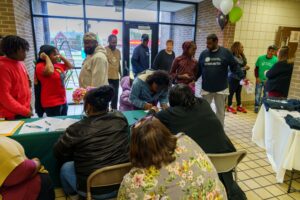
Additionally, Shannon Ward, Family Program Administrator of University Settlement was recognized for her outstanding contributions to the community.

The success of the Sneaker Ball was made possible through the generous support of sponsors, including Warners Girls’ Leadership Academy, Mound STEM School, Albert Bushnell Hart Elementary School, and University Settlement’s Youth and Fatherhood Initiative programs.

As the night came to a close, many expressed the event reaffirmed the importance of family, community, and shared experiences in shaping the fabric of the neighborhoods.


Legal Aid helps Northeast Ohioans get ‘Economic Justice’

By Tonya Sams

Money issues can cause an enormous amount of stress and fear. Concerns about money can determine housing choices, whether or not basic needs are met, a person’s quality of life, and more. Money stressors not only include the size of a paycheck or being in debt, but also employment and unemployment issues, foreclosures, estate planning, taxes, and bankruptcy. The Economic Justice group at The Legal Aid Society of Cleveland helps clients navigate the waters of difficult legal financial woes.

“The Economic Justice Group provides direct representation for clients needing legal assistance related to money and advocates for systemic change that will result in greater economic stability for our client community,” said Barbara Barreno-Paschall, senior attorney in the Economic Justice group. “The five legal areas that the Economic Justice group focuses on are employment, consumer, tax, bankruptcy, and estate planning.”

When assisting with employment issues, economic justice attorneys help clients remove barriers to employment such as sealing criminal records or applying for a Certification of Qualification for Employment or CQE (part of an Ohio law that helps people with criminal records obtain employment), sealing and expunging juvenile records, and employment discrimination.

Clients experiencing consumer legal issues are assisted with mortgage and property tax foreclosure, debt collection lawsuits, car repossessions, student loans, payday loans, auto title loans, and medical or nursing home collection.

Economic Justice attorneys also help clients settle disputes with the Internal Revenue Service (IRS) about personal federal income taxes and file for Chapter 7 bankruptcy protection. They also help with estate planning, including helping clients with wills and clearing tangled property titles.

There is one area of law where the Economic Justice group receives the most requests for assistance.

“Historically, we get a huge number of requests for bankruptcy assistance. We saw a drop off during the pandemic when debt collection was paused, but our bankruptcy numbers have been increasing over the last year,” Barreno-Paschall said. “Individuals who have low income often find themselves in financial situations in which they have accumulated debt that they are unable to pay off, no matter how much they would like to do so.”

The state of the economy can have a huge impact on bankruptcy cases.
“As prices have risen due to changing economic conditions, it has become harder for our client community to keep up with increased living expenses.

This would include housing costs, transportation, and food, when their wages are not increasing at the same rate, or when they are on a fixed income such as Social Security,” Barreno-Paschall said. “For many Americans, they are one car accident or health emergency away from not being able to pay their bills each month because they have not been able to save due to increased costs and stagnant wages.”

The Legal Aid Society of Cleveland serves residents of Ashtabula, Cuyahoga, Geauga, Lake, and Lorain counties. To get help with financial legal issues, call Legal Aid’s Economic Justice infoline at 216-861-5899, or seek help online at www.lasclev.org.

Tonya Sams is a Development & Communications Manager at The Legal Aid Society of Cleveland.

July is Cord Blood Awareness Month: Why You Should Care

 By Sharon Lewis
What is cord blood? It is the blood in the umbilical cord – the lifeline that connects a baby to its mother. While cord blood is considered medical waste, it contains red and white blood cells and is rich in stem cells.
Red blood cells (RBCs) transport oxygen from the lungs to the body and return carbon dioxide to the lungs. White blood cells (WBCs) are key to the immune system. They protect against infections by identifying and destroying pathogens. Stem cells can differentiate into various cell types and self-renew. Hematopoietic stem cells in bone marrow produce all blood cells, including RBCs, WBCs, and platelets. They are vital for growth, tissue repair, and treatments like bone marrow transplants for leukemia.
Stem cells can be used to treat approximately 80 different medical conditions. Stem cells have been used in transplant medicine and, more recently, in regenerative medicine – the research and application of therapies that support the body’s ability to heal itself.
Cord blood can be stored or banked after delivery without discomfort or inconvenience to the mother or child. For a healthy person, making stem cells is not a problem. For those individuals, stem cells from cord blood can be
lifesaving, and banking cord blood can serve the entire community.
What Diseases and Medical Conditions can be Treated with Cord Blood?
Scientists have already determined that many cancers, including leukemia, Hodgkin’s disease, non-Hodgkin’s lymphoma, and some solid tumor cancers can be treated with stem cell therapies.
Also, many blood, genetic, metabolic, and immune system conditions can be treated with stem cells. Research is underway to determine if they can be used to treat such conditions as stroke, diabetes, birth asphyxia (brain damage from low oxygen), cerebral palsy, autism, Parkinson’s disease, Amyotrophic Lateral Sclerosis (ALS), heart failure, osteoarthritis, and other conditions.
According to Advanced Nurse Practitioner Monique Jones MSN is a nurse practitioner in Southfield, MI., stem cells and other biologic agents are being utilized in wound healing, along with infection control and nutrition, to decrease the size of wounds quickly and exponentially.
Cord Blood Collection 
The process of collecting cord blood begins after the baby is delivered. After the umbilical cord is cut, the cord and placenta are collected, and a needle is inserted into the cord to extract the blood which then goes into a sterile bag with a blood thinner so the blood does not clot. No blood is taken from the baby or mother. The collection can be done after a vaginal or cesarean section delivery.
Storing Cord Blood
Parents interested in banking their cord blood should inform their healthcare provider who may be able to collect and send the cord blood to the cord blood bank. Unfortunately, not all hospitals do the collection. Once there, the blood is processed, typed, and screened for diseases or other disorders to ensure that it is safe to use. The blood is cryogenically frozen and then stored.
Reasons to Bank Umbilical Cord Blood
A common question for parents is “Can my child use their own cord blood?” The answer to that is no. However, siblings or other family members may be able to use the banked cord blood for a life-saving stem cell transplant. The storage process does not affect you or your child and it gets thrown away. There is no risk and no harm done by electing to store it.
By banking cord blood, the life of a loved one or of a perfect stranger may be saved. Either way, it could save a life.
Sharon Lewis graduated from John Carroll University with a Bachelor of Arts in Speech Communications and holds a Master of Education from Cleveland State University.