CityVoiceCLE Local updates. Clear action.

Sneakers Ball in Slavic Village


Story & photos by Mark Silverberg.

The Stella Walsh Recreation Center was buzzing with excitement on April 19, as its first Sneaker Ball brought together fathers, children, and community members for a night of celebration and bonding.

Organized as a tribute to the neighborhood’s fathers and their vital role in the community, the Sneaker Ball encouraged attendees to don formal attire paired with their freshest sneakers, creating a unique and stylish atmosphere.

“This event is all about strengthening bonds between fathers and their children while celebrating the vibrant culture of our neighborhood,” said event organizer, Mr. Roach. “It’s a chance for families to come together, have fun, and make lasting memories.”
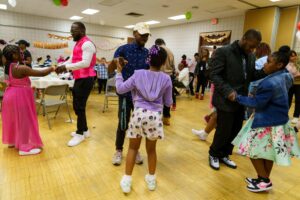
The festivities resembled a festival, offering a diverse range of activities for attendees of all ages. A lively DJ kept the energy high as guests enjoyed a sumptuous dinner and indulged in treats from a cotton candy machine and candy table.

Children were treated to a sneaker table where they could showcase their favorite kicks while giveaways at the sock table added to the excitement. A photographer captured special moments throughout the evening, providing families with lasting mementos.
The event also served as a platform for fathers to connect and network with one another, fostering a sense of camaraderie and support within the community.

“We wanted to create an environment where fathers could come together, share experiences, and build meaningful relationships,” said Mr. Roach. “It’s inspiring to see the positive impact that these connections can have on families and the community as a whole.”
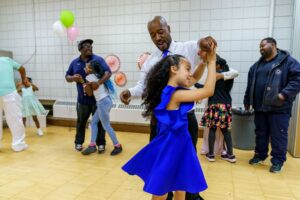
More than 180 community members attended the Sneaker Ball, underscoring the event’s significance within the neighborhood. Among the highlights of the evening were the awards presented to Hudson Lee, Raheem Stover, and Charles Mosby for their exemplary dedication and growth as fathers.
Additionally, Shannon Ward, Family Program Administrator of University Settlement was recognized for her outstanding contributions to the community.

The success of the Sneaker Ball was made possible through the generous support of sponsors, including Warners Girls’ Leadership Academy, Mound STEM School, Albert Bushnell Hart Elementary School, and University Settlement’s Youth and Fatherhood Initiative programs.
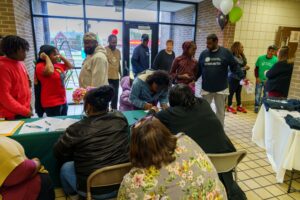
As the night came to a close, many expressed the event reaffirmed the importance of family, community, and shared experiences in shaping the fabric of the neighborhoods.


Residents Discuss the Future of Slavic Village

By Mark Silverberg

A meeting brimming with excitement unfolded in Slavic Village at the Darl Center for the Arts. Nearly 70 Slavic Village neighbors, business owners, and representatives of community institutions gathered to envision the future of the Slavic Village community. What were the high priorities of residents? How could residents and institutions cooperate to foster a thriving future? What are the next steps to realize this vision?

The Discussion

Earl Pike, former Executive Director of University Settlement, highlighted the significant changes underway in Slavic Village in his introduction. New executive directors were on the horizon for University Settlement, Slavic Village Development, and the Boys and Girls Club. Earl emphasized the necessity of collaboration among the institutions in Slavic Village to effectively serve residents’ interests, citing ongoing challenges faced by residents.

Tom O’Brien and Taryn Gress of Neighborhood Connections facilitated the meeting, prompting participants to identify one thing they love about Slavic Village. Ten minutes were allocated for small group discussions on this theme. Residents expressed admiration for the resilience of the people, the positive neighborhood organizations, community restaurants, loyalty, churches, and various other aspects of Slavic Village.

Attendees were asked to provide examples of times when the community had united to effect positive change:

  • Preventing the establishment of the new Cuyahoga County jail in Slavic Village.
  • Transforming Trick or Treat on Fleet into an annual event, now in its fifth successful year. Organizers, led by Tamika Compton, responded to a community need, experimented with different trick-or-treating approaches, and achieved significant success.
  • The initiative behind Trick or Treat on Fleet spurred the organization of other community events, such as the recent Bunny Hop. It catalyzed the establishment of the Southeast Cleveland Resource Center, now in its second year.
  • Residents addressed concerns about groundhogs at the North Broadway Network Night, launching a campaign supported by a grant from Neighborhood Connections. This effort involved obtaining cages and a certified wildlife trapper, conducting an awareness campaign with t-shirts and yard signs, and hosting a free screening of the Groundhog Day movie. Neighbors collaborated to tackle a common problem.

Attendees also voiced a desire for more of the following in Slavic Village:

  • Improved information sharing and communication to keep residents informed about neighborhood developments, with SVD’s website highlighted as a valuable resource
  • Establishment of a community calendar and resource hub to disseminate information about events and available resource.
  • Implementation of a positive media campaign highlighting successes and positive aspects of Slavic Village.
  • Development of an asset map of Slavic Village to inform future planning based on community assets, shifting away from a focus on deficits.
  • Provision of small grants to support block clubs and events, as well as to fund block captains, recognizing the importance of block clubs in fostering neighborhood connections.
  • Creation of part-time paid positions for neighborhood activists to prevent burnout from volunteering.
  • Expansion of spaces similar to Darl’s Collection, including the renovation and activation of historical buildings, and the utilization of vacant spaces for creative endeavors such as music and art, as well as business spaces to support entrepreneurs

Expectations for the leadership of larger organizations in Slavic Village included:

  • To foster cooperation among the leadership of community institutions to benefit residents, setting aside ego.
  • To partner with grassroots groups already engaged in community work.
  • To ensure transparency regarding programs, plans, priorities, strategies, budgets, and expenditures.
  • To advocate for resident democracy, allowing every resident to become a member of the SVD board with voting rights, similar to the model on Cleveland’s west side, and electing board members from the community.
  • To improve reporting on the follow-through of priority issues identified by residents.
  • To strengthen connections with stores and businesses in the neighborhood.

Conclusion and Next Steps

Considerations of why certain neighborhoods receive more funding from the City of Cleveland, Cuyahoga County, and other funders encompass various factors. These include the tax base of a neighborhood, the origins of its leaders, and the magnitude of longstanding structural challenges. However, one certainty prevails, when residents have a voice in decision-making, it results in investments of funds and energy that are more likely to yield lasting and impactful outcomes.

At the community meeting, residents expressed hope that the dialogue they initiated would persist into the future. Perhaps the new leaders of Slavic Village Development, Shauna Sanders, and University Settlement, Richaun Bunton, could play a role in facilitating this process.

The meeting underscored the neighborhood’s existing wisdom necessary to envision and cultivate a flourishing Slavic Village. Numerous examples illustrate residents coming together to drive positive change, such as Community Yahoos, Slavic Village Stakeholders, the Southeast Cleveland Resource Center, Slavic Village Neighbor Night, and others. The challenge now lies in harnessing this reservoir of knowledge, establishing an ongoing community engagement process that prioritizes resident voices, and effecting lasting, positive change aligned with resident priorities.

Billboard Celebrates Fathers in Slavic Village

By Mark Silverberg

University Settlement unveiled a billboard in Slavic Village on Aug. 15 which celebrates fathers who participate in their Fatherhood Initiative and Rise-Reentry Programs. The billboard is on Harvard Avenue, just west of E. 71st St., facing west. As of Aug. 25, over 50,000 people have viewed the billboard!

These programs at University Settlement support and assist fathers in the Slavic Village Community and the Cleveland Metropolitan area.  Both programs work closely with the Department of Children and Family Services. They are:

  • The Fatherhood Initiative program engages with fathers by offering them ways to become better fathers and role models to their children. The range of services includes parent enrichment classes, building healthy relationships inside and outside the community, and assisting them with support and housing needs.
  • The (RISE) re-entry program allows fathers who have court involvement and are on parole probation to obtain assistance and support. Those services include employment, mental health, vocational training, legal aid, and more.

Both of these programs seek to capture each father’s potential and wrap services around them to break down any barriers they face, and to assist them to become resilient and thrive throughout their lives. Both the fathers, families, and community benefit from this investment in the importance of fathers and fatherhood.

If you are interested in participating, or for more information please contact, Markis Jordan at
mjordan@universitysettlement.net or call 216-456-0909.

Markis Jordan (l), Program Manager talks about the importance of the programs at University Settlement.


Andre Bruce, one of the program participants, talks about the importance of the fatherhood support programs at the billboard unveiling.


Turning Trauma to Positive Change

By Mark Silverberg

<em>Ashley Knierim; Photo: Jack Kuhn</em>
Ashley Knierim; Photo: Jack Kuhn

On March 19, Ashley Knierim, daughter of Jack Kuhn and Ginny Knierim-Queen, tragically died of a drug overdose in Cleveland’s Slavic Village neighborhood. Ashley had grown up and lived her whole life in that community. Many people knew and loved her. On April 2, 2023, family and friends gathered with Ashley’s parents for a candlelight vigil and balloon release in her memory.

<em>The community gathers for prayer and a moment of silence.</em>
The community gathers for prayer and a moment of silence.

The mix of neighbors in attendance represented the diversity of the community. White, Black, and Latino talked, mingled, hugged, and shared stories. Some of these stories were about how drugs destroy families.

<em>Patty, a family friend and former babysitter of Ashley, uses a poster to teach her daughter about the dangers of drug use. Through layers of family and community trauma, neighbors united in the hope that Ashley was now at peace and out of pain.</em>
Patty, a family friend and former babysitter of Ashley, uses a poster to teach her daughter about the dangers of drug use. Through layers of family and community trauma, neighbors united in the hope that Ashley was now at peace and out of pain.

Time and time again, community members with mental health challenges have been lost to hard drugs while in search of self-medication. Odetta Fields, a longtime resident and friend to many in attendance, invited residents to visit the Southeast Cleveland Resource Center, where they can get free Narcan, fentanyl test strips and harm reduction information. These are offered with no questions asked.

<em>A wooden cross attached to a nearby telephone pole held Ashley’s name and dates of her birth and death.</em>
A wooden cross attached to a nearby telephone pole held Ashley’s name and dates of her birth and death.

“In Slavic Village, drug use is widespread, and a significant amount of the drugs being sold as heroin, cocaine, etc. contain fentanyl and other unknown substances, which greatly increases risks,” according to Bethany Roebuck.

<em>Just below the cross, neighbors attached pictures, tributes and stuffed animals to show their love and affection.</em>
Just below the cross, neighbors attached pictures, tributes and stuffed animals to show their love and affection.

Roebuck is the Executive Director of Thrive for Change, a local non-profit organization focused on harm reduction. “There is an epidemic of overdoses, infections, and deaths from this unpredictable street supply, which can be seen both in Slavic Village and in communities across our country. The health care system in our country was not designed, nor has the capacity, to tackle the many factors of this epidemic including poverty, lack of mental and public health funding, and unaddressed layers of trauma, all stemming from a system of ineffective drug policies and stigma.”

“Another contributing factor to the current epidemic is the lack of staffing in many support services. People spend many hours on hold on the phone to apply for food stamps or Medicaid.” So says Sara Szelagowski, Founder and Program Director of Project White Butterfly. “The result is they cannot apply for or receive the benefits they need. This contributes to food insecurity, untreated mental health issues, and people not getting the medical care or prescriptions they need. Not having peoples’ basic needs met are factors which can contribute to ongoing substance use.”

<em>Odetta and a friend comfort Ginny. They needed comfort and support from each other, deeply hoping to find meaning in Ashley’s death.</em>
Odetta and a friend comfort Ginny. They needed comfort and support from each other, deeply hoping to find meaning in Ashley’s death.

<em>Jack Kuhn and Ginny Knierim-Queen</em>
Jack Kuhn and Ginny Knierim-Queen

To address these challenges, Jack and Ginny are starting a foundation. It will create educational resources around the risks of drug usage by people with mental health challenges. These resources will be located at the Southeast Cleveland Resource Center, and will help community members identify and respond to warning signs with the help people need.

<em>Polonia and E. 68th St, site of the candlelight vigil.; Photo credit: Taco Slayer Aerial</em>
Polonia and E. 68th St, site of the candlelight vigil; Photo credit: Taco Slayer Aerial

Their first fundraiser will be on June 18th at the Arbor Pavilion in Newburgh Heights from 3-9 pm. For more information and to get tickets please contact Jack Kuhn at (216) 536-0621.

Jack and Ginny thanked the more than one hundred people who came to honor Ashley’s memory. Candles were lit and prayers were said. Odetta points out The Garden of Life. It is a community garden that will soon be refreshed with art and information on the themes of mental health, harm reduction and community care. Odetta excitedly observes, “The neighborhood is coming back!”

<em>The Garden of Life is a neighborhood gathering place; Photo courtesy of O. Fields.</em>
The Garden of Life is a neighborhood gathering place; Photo courtesy of O. Fields.

Drug Education and Services In Slavic Village

By Mark Silverberg

Slavic Village residents turned out for a valuable community health event at the new Southeast Resource Center on Nov. 9th. Four organizations cooperated to provide free drug education, Narcan and naloxone kits, fentanyl testing strips, and train residents on how to respond to drug overdose situations. The response of residents was enthusiastic and appreciative.

The four organizations and their areas of focus are:

Thrive for Change is a Cleveland-based nonprofit organization dedicated to eliminating overdose fatalities and other harms associated with substance use. Each week its team conducts outreach and naloxone (overdose reversal drug) distribution in underserved overdose hot-spot communities. Over the last two years, Thrive for Change has trained over 4,000 people on overdose response, equipped the community with 10,000 naloxone kits, and prevented an estimated 400 overdose fatalities. In addition to its in-person outreach, it also operates a mail-order naloxone program where anyone in Ohio can submit a request to receive a free naloxone kit delivered straight to their door. If people would like to get a kit for themselves, learn more, donate, or volunteer they can learn how by visiting thrive4change.org, stopping by 29201 Aurora Rd, Suite 400, Solon, OH 44139, calling 1-877-636-3777 extension 761, or emailing broebuck@thrive4change.org

The SOAR Initiative (Safety, Outreach, Autonomy, Respect) is a Columbus-based organization started by students at The Ohio State University.  It works for harm reduction, tries to give voice to People With Substance Use Disorder (PWUD), and meets people where they are to offer support. SOAR provides a state-wide, mail-order fentanyl test strip program, safe-use supplies, and a SOAR app. This app allows people to anonymously report suspicious contaminated drugs, gives real-time text alerts on contaminated drugs in an area, and finds local resources. App users have confidence their identities won’t be disclosed which allows SOAR to receive more information from residents, get more information out to the affected communities and save lives. Jessica Collier of SOAR said: “One of the things I, as a person with PWUD, admire about SOAR is they uplift and amplify the voices of people’s lived experience, as we are the experts. This organization values our time, voices, and ideas. It gives us the opportunity to use our experience to provide input to bring about the changes we know are needed, to help folks have their basic needs met and be treated with respect.” For more information download the SOAR app, send mail to PO Box 3420, Columbus, OH 43210, or call 419-670-7627.

Project White Butterfly’s (PWB) vision is a world that takes responsibility for supporting recovery from substance use disorder. Its mission is to reduce harm, promote recovery, and encourage healing from substance use disorder by sharing messages of hope, cultivating a supportive community, and providing connections to resources. It operates on the values of empathy, love, encouragement, joy, and collaboration.

Sara Szelagowski, its founder, said “Though many detox and substance use disorder treatment centers exist in our community, many people actively using drugs do not know how to connect with these services to reduce harm and provide support on their journey towards recovery. Even if people are aware of the available services, they often feel ashamed and hesitant to reach out for help due to fear of judgment and discouragement from prior attempts to utilize resources.”

By allowing easy access to its programs, understanding the lifestyles of those in active use, and taking a neutral and personal approach, Project White Butterfly aims to connect individuals by meeting people where they are on their journey, both geographically and mentally. PWB meets people on the streets of their communities to provide tools and support, share information for services, and help them feel safe to share their unique stories. PWB aims to serve all persons who struggle with substance use disorder regardless of race and ethnicity, class, sexual or gender orientation.

PWB has developed two creative programs worthy of note. The first is a walk-through gallery called “Dispelling Stigma,” which presents statistics, science, and real-life stories of people with substance use disorder (SUD) for display at libraries, the Cuyahoga County Justice Center, high schools, and YMCA locations. The second is a Community Safe Space Meeting that addresses the ripple effect that substance use has on the lives of the people around the user.  At these meetings, people can find strength, comfort, and tools, and know they are not alone on their journeys of loving—and wanting to help—people who use drugs. For more information contact PWB at 7452 Broadview Road, Suite #148, Parma, OH 44134, phone 216-727-8725, or email support@projectwhitebutterfly.org.

Community Medical Services is a Medication Assisted Treatment provider that believes in offering treatment with medication, harm reduction, and behavioral health support. CMS is committed to breaking down the barriers to treatment, meeting all persons where they are, eliminating the negative consequences of drug use, and providing quality medical care and treatment to those suffering from an opioid use disorder. They have six (soon seven) clinics in Ohio and dozens of others throughout the United States. Their two local offices are at 2020 Carnegie Avenue in Cleveland and 7 Severance Circle in Cleveland Heights. CMS strives to provide the highest level of care and accepts walk-in assessments and services to start the journey to recovery. Contact: communitymedicalservices.org, or call 216-859-9500.

All of these organizations offer much-needed services to our community, each with a particular focus. This event at the Southeast Resource Center was a great example of how service organizations can work together to benefit our residents in areas of great need in our community. Contact them to host an event at your organization!


New Resource Center Opens in Slavic Village

By Mark Silverberg

The Broadway-Slavic Village (BSV) neighborhood is a diverse community with many assets and challenges. BSV is challenged by very high housing foreclosures, HIV rates, poverty, drug addiction, and violent and property crimes. The combination of these hardships and crises has left a desolate feeling within a once-thriving community. In the face of these challenges, a group of inspired residents came together to create a place in the community to help secure the resources residents need to face their challenges. They believe the residents and community deserves a chance to thrive.

As background, BSV was ground zero during the 2006-2008 housing crisis, with 783 foreclosure filings in 2007 within the 44105 zip code (Realty Trac). Forty-three percent of the population of 40,000 is below the poverty level, and 11% are seniors over sixty-five. BSV has an extremely high rate of HIV infections which can be traced back to high rates of poverty and drug addiction. BSV ranks very high among Cleveland neighborhoods in both violent and property crimes.

The solution these residents came up with just opened a few weeks ago and is called the Southeast Cleveland Resource Center. Their team is made up of Program Director Troy Simmons, Drug and HIV Coordinator Chris Miller, Housing Specialist Meeka Compton, and Director Odetta Fields. The team is committed to listening to residents of Slavic Village and the surrounding communities, learning what their challenges are, and connecting them with resources that help address their everyday needs.

Their door is open for anyone to come through and get the resources they need. If they cannot provide the resources directly, they will walk residents through the steps to get the help they need by networking with other assets. The resource center also provides 24/7 access to police officers in the neighborhood so they can have a place to rest their feet, get a cup of coffee, heat up lunch, use a clean bathroom, or write a report.

The resource center has become a gathering place for residents. They stop by to chat, pick up pictures of recent community events, or talk about what’s going on in their lives. Programs have been held on drug treatment education and provided tools to help residents who face these challenges. During the recent Trick-or-Treat on Fleet event, face painting at the Resource Center was one of the most popular attractions. Neighborhood Connections Network Night was held at the resource center recently; contributing to it being seen as a place where neighbors gather to share their challenges and hopes, and learn new skills.

This resource center has been a dream of Odetta Fields for over three years. As she worked to bring this dream to reality, she was told by different influencers in Cleveland it was not needed, and that Slavic Village was not a suitable location. However, in the brief number of weeks since the Resource Center has been open, and the many residents they have helped and served, it is clear that Odetta’s vision was right on target. Perhaps some powers in Cleveland feel the people of Slavic Village don’t deserve to have their basic needs met, or it isn’t a priority. Odetta and her team are proving the objections wrong by weaving together a beloved community one person at a time, reminding us of what we can be to each other.

The Southeast Cleveland Resource Center is located at 5211 Fleet Avenue. Its hours are 9 a.m. to 5 p.m., Monday – Saturday. (Evening hours are being planned for the near future). The Center’s phone number is (216) 266-0278.

University Settlement Celebrates Events in Slavic Village

By Mark Silverberg

University Settlement, a pillar of the Slavic Village community since 1926, celebrated two important events recently. On Oct. 26, they held their Annual Taste of Slavic Village annual fundraiser, and on Nov. 10, they held the Ribbon Cutting Ceremony for their new building at 5115 Broadway. Both events were celebrations of hope, community, and investment in Slavic Village.

Russell receives award
Erika Brown, Neighborhood Connections

Taste of Slavic Village was held at the Bohemian Hall and had its largest attendance ever with over 350 attendees. The benefit raised over $50,000 for social programs for Slavic Village residents. Over 15 food vendors ensured the attendees were well fed, with everything from kielbasa and pierogis to vegan baked goods. A great blues band played, which included employees of University Settlement, and there were raffles and wine pulls. A number of awards were presented including to Ms. Rozella Russell (pictured in red) who received University Settlement’s first-ever Lifetime Achievement Award for her 20 years of dedicated service and many contributions to the Youth Department and agency. The strength of connection and commitment so many people feel for Slavic Village and University Settlement was evident among the festive crowd.

Michael Baston, President of Tri-C
Myr Bibb addresses audience

Nov. 10 saw a celebration that was a long time in planning. University Settlement will be moving into its new home at 5115 Broadway in approximately six months after the build-out is complete. Scott Skinner of NRP Group, the construction company, opened up the program by talking about the importance of affordable housing to the community and their company. Earl Pike of University Settlement thanked many who contributed in many

Standing ovation for Village activist Sharena Zayed (seated in green)

ways, whether residents, supportive institutions, or donors to bring the new home for University Settlement into reality. Many speakers, including residents, Mayor Justin Bibb, Councilman Richard Starr, and Marc Stefanski (Third Federal Savings and Loan) spoke about the importance of including resident voices in development decisions. Significantly, Tri-C announced they will locate an Access Center in the University Settlement building, a very important development.

Mark Stefanski of Third Federal.

The combination of these two events has resulted in a surge of hope and energy in Slavic Village. Congratulations to the University Settlement team who, in service to Slavic Village residents and community, ensured the success of these two milestone events.

Fleet Avenue Jamboree Returns

By Mark Silverberg

For the first time in 18 years, September 24, 2022 saw the return of the Walter Hyde Memorial Fleet Avenue Jamboree in Cleveland’s historic Slavic Village neighborhood. Hundreds of residents turned out with dozens of vendors, elected officials, and resource tables. There were at least 15 musical acts ranging from classic rock to hip hop, folk, blues, and other genres. There was a great diversity of food, including, of course, pierogies and kielbasa, with vegan options, smoothies and much more. The sponsors included University Settlement, Cleveland AIDS Task Force, Neighborhood Connections, Buildings and Food, Fleet Avenue Stakeholders, REACH, Vic’s Floral, Boss K-9, AT&T, Small Organization Solutions, Pamela Hawkins, Carl Chaney, Barb Witovicz, and The Walter Hyde Family. What a great day in Slavic Village!


New Street Lace to Beautify the Streets of Slavic Village

By Ron Calhoun


Slavic Village is comprised of several unique neighborhoods with amazing block clubs. These clubs were formed out of a passion for the neighborhood and building community by residents coming together to help each other and sponsoring events and initiatives.  


The Warszawa Block club is concerned with (1) keeping the neighborhood clean, (2) helping each other beautify, and (3) addressing traffic safety in a highly dense residential neighborhood. There are a lot of children in the area who play on the street and ride bikes, and parents are concerned with cars not stopping at stop signs, speeding, and the lack of basic traffic enforcement.


The group met consistently for almost two years. The result is what the group calls “Street Lace,” beautifully painted curbs and street paintings at various locations throughout Slavic Village. The Northeast Ohio Areawide Coordinating Agency  (NOACA)  will supply funding along with materials including paint and ADA ramps from its street supplies program.  The City of Cleveland’s Traffic Engineering department helped coordinate and advise the group on the process as well as following city ordinances and obtaining permits.


The Cleveland Observer found Joy Cummings, Anthony and Tiffany Andreolli, and other neighbors and friends including “The Rocker” Scott Pickering, completing the finishing touches on the project. Andreolli mentioned how drivers are “becoming more aggressive in neighborhoods.”  Cummings said, “Temporary speed bumps over the summer months every year would be a great addition to the Street Lace.”


Joy Cummings standing in “Street Lace.”

Neighbors coming together to help each other seems to be a relic of the past. Cleveland was a city of strong neighborhoods with vibrant street clubs. Some might remember annual spring-cleaning programs, which entailed older members as well as the youth raking leaves, painting houses, whitewashing trees and curbs, and landscaping.


History 


The street club organizations also held street club bus trips to amusement parks and “Back to School” dances for the children which included refreshments, prizes, and music. The Fairfax neighborhood was known for picnics and banquets. Some Street clubs would have holiday focused events. Street clubs, also known as neighborhood clubs or civic clubs, were prominent, especially in Cleveland’s east side neighborhoods, such as Fairfax, Glenville, and Hough. An annual meeting called “Street Club Organization Day” started in 1968 to bring together street club presidents to lead combined efforts to address problems plaguing the community. Workshops were led by the Street Club Presidents League, as well as representatives of various community non-profit organizations such as Citizens for Better Housing Inc. and the University-Euclid Development Center.


Through the meetings, combined club efforts yielded clean-up campaigns and an award banquet. Street clubs also participated in yearly beauty contests known as “The Beautiful Block Contest” and “The Bright and Beautiful Contest,” once sponsored by the Call and Post.

Source: cleveland historical.org


“Kudos” to The Warszawa Block club, a neighborhood leading the way back to the community building basics. Wouldn’t it make Cleveland great if all the neighborhoods had a functioning street club?