CityVoiceCLE Local updates. Clear action.

Assata Shakur, Racial Justice Activist, Dies at Age 78

Listen to this article

Assata Shakur, a prominent Black liberation activist and longtime political refugee, died on Sept. 25 in Havana, Cuba, at age 78. The U.S. government categorized Shakur as a dangerous terrorist, but to many supporters, she was a symbol of resistance and a source of inspiration.

Early Activism

JoAnne Deborah Byron was born in New York City in 1947. While attending college, she became involved in political activism advocating for racial and social justice.


After graduation, she adopted the name Assata Olugbala Shakur and briefly joined the Black Panther Party, an activist group focused on the protection and care of the Black community.

Later, she joined the more militant Black Liberation Army (BLA). The BLA believed that “law is never impartial, never divorced from the economic relationships that brought it about” and advocated for “total liberation from those forces that maintain our oppressive condition.”

Shakur spent the early 1970s fighting a range of criminal charges against her, including robbery, kidnapping, and murder. In every case, she was either acquitted or the charges were ultimately dismissed.

New Jersey Turnpike Shootout

In 1973, however, a car in which she was riding with fellow Black activists Zayd Malik Shakur and Sundiata Acoli was stopped by New Jersey law enforcement. A shootout occurred that resulted in the deaths of Zayd Malik Shakur and state trooper Werner Foerster. Assata Shakur was shot in the arm, and Acoli was wounded.

Supporters cited evidence suggesting her innocence. Shakur was found guilty of the state trooper’s murder by an all-white jury in 1977 and was sentenced to life in prison.

Targeted by COINTELPRO

Shakur believed she had been targeted by the Counter Intelligence Program (COINTELPRO), a covert FBI program created by J. Edgar Hoover to stop communism and squelch other forms of political dissent in America.

“Under the COINTELPRO program, many political activists were harassed, imprisoned, murdered or otherwise neutralized,” Shakur wrote in a 1998 open letter published on her website.

“The FBI, with the help of local police agencies, systematically fed false accusations and fake news articles to the press, accusing me and other activists of crimes we did not commit.

Although in my case the charges were eventually dropped or I was eventually acquitted, the national and local police agencies created a situation where, based on their false accusations against me, any police officer could shoot me on sight.

It was not until the Freedom of Information Act (FOIA) was passed in the mid-’70s that we began to see the scope of the United States government’s persecution of political activists.”

Other Black activists targeted by COINTELPRO include Martin Luther King, Malcolm X, Elijah Muhammad, and Black Panther Party members Bobby Hutton, Fred Hampton, and Mark Clark.

Political Asylum in Cuba

With the help of fellow activists, Shakur escaped from prison in 1979 and fled the United States. She was the first woman to be included on the FBI’s Most Wanted list, and the FBI offered a $2 million reward for her capture. She was granted political asylum in Cuba by Fidel Castro in 1984 and lived the rest of her life there.

While in Cuba, she continued her activist work primarily through books, articles, and interviews. A detailed archive of her writings remains available on her website www.assatashakur.org.

“At this point, I think that it is important to make one thing very clear,” Shakur wrote in 1998. “I have advocated and I still advocate revolutionary changes in the structure and in the principles that govern the United States.

I advocate self-determination for my people and for all oppressed people inside the United States. I advocate an end to capitalist exploitation, the abolition of racist policies, the eradication of sexism, and the elimination of political repression. If that is a crime, then I am totally guilty.”

Responses to Her Death

In a Sept. 28 post on X, former FBI director Kash Patel reiterated the government’s belief in her guilt.

“The FBI never stopped calling her what she was: a terrorist,” Patel wrote. “Mourning her is spitting on the badge and the blood of every cop who gave their life in service.”

In a Sept. 26 post on X, the Chicago Teachers Union memorialized her differently, calling her “a revolutionary fighter, a fierce writer, a revered elder of Black liberation, and a leader of freedom whose spirit continues to live in our struggle.” This post was criticized by Chicago alderpersons but supported by Chicago Mayor Brandon Johnson.

Presidential professor of Anthropology and Urban Educator Dr. Marc Lamont Hill remembered Shakur as “a legend and a mentor and a resource to so many of us.”

“Although she remained hidden in Cuba, especially in the later years, she just stands tall and strong, and I’m grateful that she was able to live free and die free,” Hill said on a recent episode of “The Joe Budden Podcast.”

“So we always say hands off Assata, always free all political prisoners, always love to Assata. So we say rest in peace as she returns to the ancestors.”

Angela Hay is a professional writing & journalism student at Capital University in Columbus, Ohio. She has written and edited for Capital Stories, Capital Magazine, and the university’s student newspaper, the Chimes.
Africa’s Influence on Christianity is profound, often overlooked

Guest Writer

The influence of Africa on Christianity is profound and often overlooked. To understand this, we need to delve into the early history.

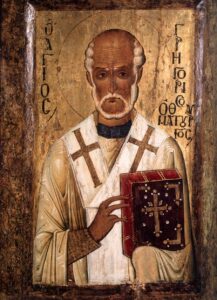
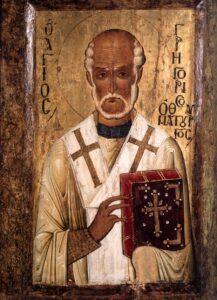
Christianity was born in the eastern Mediterranean region, in what is today Israel and Palestine. From there, it spread rapidly across the Roman Empire, reaching Africa early on. North Africa, in particular, was a significant center for Christian thought and practice. Alexandria, in modern-day Egypt, was a major center of Christian scholarship, and influential thinkers like Origen of Alexander and Athanasius lived and wrote there.

Origen was born in the city of Alexandria, Egypt, around 185 AD. His parents were Christian, and his father was killed during the persecution of Christians under the Roman Emperor Septimius Severus. This event, along with his mother’s dedication to the faith, strongly influenced Origen’s religious beliefs and shaped his future.

Origen of Alexander an Egyptian Christian theologian. His greatest work is the Hexapla, which is a synopsis of six versions of the Old Testament.

Origen was known for his incredible intellect and dedication to scholarship, studying under the philosopher Ammonius Saccas and later becoming a teacher of Christian theology and philosophy himself. He was a prolific writer, producing numerous works on theology, biblical commentary, and philosophy. One of Origen’s most significant contributions to Christianity was his systematization of Christian doctrine. He is often credited with introducing the allegorical interpretation of scripture, which became a standard approach in Christian theology.

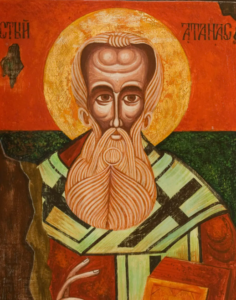
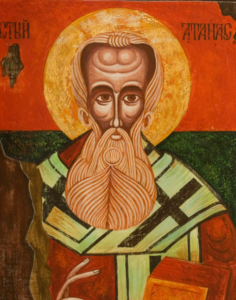
Athanasius of Alexandria an Egyptian Christian theologian, the chief proponent of Trinitarianism

Origen’s influence extended far beyond his lifetime. His ideas shaped the development of Christian theology and the understanding of scripture, and his work laid the foundation for the emergence of systematic theology in the Christian tradition. Origen’s legacy as a Christian scholar, theologian, and philosopher endures to this day, and his works continue to be studied and debated by scholars and theologians around the world.

St. Athanasius, also known Africa’s Influence on Christianity is profound, often overlooked as Athanasius of Alexandria, was one of the most prominent figures in early Christian history and theology. Born around 296 AD in Alexandria, Egypt, he became the Bishop of Alexandria and played a Continued on page 9 significant role in shaping Christian doctrine, particularly during the fourth-century Arian controversy.

The Arian controversy was a theological dispute centered around the nature of Jesus Christ. Arius, a Christian presbyter from Alexandria, taught that Jesus, as the Son of God, was a created being and therefore not equal to the Father in substance or essence. Athanasius vehemently opposed this view and argued that Jesus was of the same substance (homoousios) as the Father, an idea that eventually became the foundation of orthodox Trinitarian doctrine.

Athanasius’ commitment to this belief led to his exile from Alexandria multiple times by various Roman emperors who held Arian sympathies. Despite these challenges, he continued to defend the Nicene Creed and the orthodox understanding of the Trinity, making significant contributions to the development of Christian theology.

In addition to his theological writings, Athanasius is also remembered for his role in the canonization of the New Testament. In his Festal Letter of 367 AD, he listed the 27 books of the New Testament that are recognized by most Christian denominations today.Athanasius is revered as a saint in many Christian traditions, and his legacy continues to influence Christian theology and thought. He is often referred to as “the father of Orthodoxy” for his unwavering defense of orthodox Christian doctrine in the face of opposition and persecution.

The Coptic Orthodox Church in Egypt traces its roots to St. Mark, who is believed to have brought Christianity to Egypt in the first century. The Ethiopian Orthodox Tewahedo Church also has ancient origins, dating back to the fourth century. It is worth noting that Ethiopia is the only African nation to have never been colonized, and its Christian tradition is deeply rooted in its cultural identity.

Moreover, Africa played a critical role in the early church councils, which helped shape Christian doctrine. The Council of Nicaea in 325 AD, for example, was attended by bishops from across the Roman Empire, including Africa.

It is also important to recognize that the African Christian tradition has been distinct from its European counterpart. Christianity in Africa often incorporates indigenous cultural practices and beliefs. This can be seen in the vibrant liturgical music and dance of African churches or the practice of ancestor veneration, which some African Christians see as compatible with their faith.

The spread of Christianity in Africa was not solely the result of European missionaries. In fact, long before European colonization, African Christians were evangelizing their own communities. The expansion of Christianity in Africa is a complex and multifaceted story, influenced by indigenous traditions, African Christian leaders, and European missionaries.

Overall, the history of Christianity in Africa is a testament to the diversity and adaptability of the Christian faith. It shows how a religion that originated in the Middle East was able to take root and flourish in Africa, contributing to the rich tapestry of global Christianity.


Staff Writer

The influence of Africa on Christianity is profound and often overlooked. To understand this, we need to delve into the early history of Christianity.

Christianity was born in the eastern Mediterranean region, in what is today Israel/Palestine. From there, it spread rapidly across the Roman Empire, reaching Africa early on. North Africa, in particular, was a significant center for Christian thought and practice. Alexandria, in modern-day Egypt, was a major center of Christian scholarship, and influential thinkers like Origen and Athanasius lived and wrote there.

Origen was born in the city of Alexandria, Egypt, around 185 AD. His parents were Christian, and his father was killed during the persecution of Christians under the Roman Emperor Septimius Severus. This event, along with his mother’s dedication to the faith, strongly influenced Origen’s religious beliefs and shaped his future. 

Origen was known for his incredible intellect and dedication to scholarship, studying under the philosopher Ammonius Saccas and later becoming a teacher of Christian theology and philosophy himself. He was a prolific writer, producing numerous works on theology, biblical commentary, and philosophy.One of Origen’s most significant contributions to Christianity was his systematization of Christian doctrine. He is often credited with introducing the allegorical interpretation of scripture, which became a standard approach in Christian theology.

Origen’s influence extended far beyond his lifetime. His ideas shaped the development of Christian theology and the understanding of scripture, and his work laid the foundation for the emergence of systematic theology in the Christian tradition.Origen’s legacy as a Christian scholar, theologian, and philosopher endures to this day, and his works continue to be studied and debated by scholars and theologians around the world.

St. Athanasius, also known as Athanasius of Alexandria, was one of the most prominent figures in early Christian history and theology. Born around 296 AD in Alexandria, Egypt, he became the bishop of Alexandria and played a significant role in shaping Christian doctrine, particularly during the fourth-century Arian controversy.

The Arian controversy was a theological dispute centered around the nature of Jesus Christ. Arius, a Christian presbyter from Alexandria, taught that Jesus, as the Son of God, was a created being and therefore not equal to the Father in substance or essence. Athanasius vehemently opposed this view and argued that Jesus was of the same substance (homoousios) as the Father, an idea that eventually became the foundation of orthodox Trinitarian doctrine.

Athanasius’ commitment to this belief led to his exile from Alexandria multiple times by various Roman emperors who held Arian sympathies. Despite these challenges, he continued to defend the Nicene Creed and the orthodox understanding of the Trinity, making significant contributions to the development of Christian theology.

In addition to his theological writings, Athanasius is also remembered for his role in the canonization of the New Testament. In his Festal Letter of 367 AD, he listed the 27 books of the New Testament that are recognized by most Christian denominations today.Athanasius is revered as a saint in many Christian traditions, and his legacy continues to influence Christian theology and thought. He is often referred to as “the father of Orthodoxy” for his unwavering defense of orthodox Christian doctrine in the face of opposition and persecution.

The Coptic Orthodox Church in Egypt traces its roots to St. Mark, who is believed to have brought Christianity to Egypt in the first century. The Ethiopian Orthodox Tewahedo Church also has ancient origins, dating back to the fourth century. It is worth noting that Ethiopia is the only African nation to have never been colonized, and its Christian tradition is deeply rooted in its cultural identity.

Moreover, Africa played a critical role in the early church councils, which helped shape Christian doctrine. The Council of Nicaea in 325 CE, for example, was attended by bishops from across the Roman Empire, including Africa.

It is also important to recognize that the African Christian tradition has been distinct from its European counterpart. Christianity in Africa often incorporates indigenous cultural practices and beliefs. This can be seen in the vibrant liturgical music and dance of African churches or the practice of ancestor veneration, which some African Christians see as compatible with their faith.

The spread of Christianity in Africa was not solely the result of European missionaries. In fact, long before European colonization, African Christians were evangelizing their own communities. The expansion of Christianity in Africa is a complex and multi-faceted story, influenced by indigenous traditions, African Christian leaders, and European missionaries.

Overall, the history of Christianity in Africa is a testament to the diversity and adaptability of the Christian faith. It shows how a religion that originated in the Middle East was able to take root and flourish in Africa, contributing to the rich tapestry of global Christianity


Cleveland’s Own: Father of Labor Day

By Dorothy Salem

John Patterson Green (April 2, 1845-September 1, 1940) is known as the “Father of Labor Day” due to legislation he proposed in 1890 as an Ohio state legislator to recognize Labor Day as a state holiday. The trailblazer was the second African American to serve in the Ohio House of Representatives and the first to serve in the Ohio Senate.

His parents, John R. and Temperance Green were free blacks living in New Berne, NC who moved to Cleveland in 1857. John had to leave school to help support the family, but he continued to read and learn. Ten years later, he published Essays on Miscellaneous Subjects by a Self-Educated Colored Youth (1866) and returned to attend Central High School (1866-69), the first public high school in Cleveland.

Upon graduation, he married Annie Walker, with whom he had four children: William, Theodore, Jesse and Clara. The following year, he finished his studies at Union Law School, moved to South Carolina and was admitted to the bar. The South held promise since the end of the Civil War and Reconstruction provided constitutional protections for blacks and promising careers for black Republicans.

After only two years, Green returned to Cleveland to pursue his political dreams. He became the first black elected to office in Cleveland as the Justice of the Peace. A Republican, Green held that post for nine years. In 1881, he published Recollections of the Carolinas. During that same year he ran for and won a seat in the Ohio House of Representatives where he proposed the Labor Day legislation.

In 1892, he became the Ohio Senate’s first black member and the only black legislator in the North until the 20th century. He became a founding member of St. Andrews Episcopal Church. His Cleveland Republican ties to Marcus A. Hanna, businessman and supporter of William McKinley, and to barbershop owner, George A. Myers, brought Green an appointment as U. S. postage stamp agent, a position he held 1897-1905.

He also served as acting superintendent of finance in the Post Office Department before returning to his law practice in 1906.

His wife died in 1912 and he later married Lottie Mitchell Richardson. During these years he compiled the stories of his life which resulted in his autobiography, “Fact Stranger than Fiction” (1920). At age 95, a car struck Green while crossing the street. He died from his injuries.

What Is Cinco de Mayo?

By Melvin Twigg Mason

Similar to America’s July 4 celebration, the Cinco de Mayo holiday is a celebration of Mexico’s victorious resistance to France’s desired occupation of Mexico City. It is not, however, Mexico’s Independence Day, which is not widely celebrated here in the U.S. That occurs in September and commemorates its freedom from Spain in 1821.

According to the U.S. Library of Congress, Cinco de Mayo is about a particular struggle between Mexico and France. Napoleon Bonaparte III, then emperor of France, wanted to establish a North American presence and control in Mexico. In the Spring of 1862, he sent an elite military force to take the capital city of Mexico but was met and defeated by President Benito Juarez’s ragtag forces at the city of Puebla, located about 80 miles southeast of Mexico City. That victory, on the 5th of May, was such a morale boost for the otherwise struggling country that it became an annual day of celebration!

Photo: courtesy of Rodnae Productions

Cinco de Mayo can be much more than a day for tacos and tequila. Much like our Civil War re-enactors in the U.S., many Mexicans and Mexican-Americans around this country and particularly in Mexico commemorate the day by dressing up as Mexican and French soldiers to reenact the Battle of Puebla. Other ways to observe Cinco de Mayo include Mariachi music and dancing, authentic ethnic foods, colorful costumes and decorations, parades, and fireworks. Perhaps look into enjoying some books, art, or movies by great Mexican authors and filmmakers like Frida Kahlo, Diego Rivera, Octavio Paz, and Guillermo Del Torro. If taking in a local fiesta sounds appealing, check into Cinco de Mayo with The Labra Brothers at the Music Box Supper Club.

How ever you decide to celebrate the day, at the very least, keep in mind that it is a time to commemorate people of color who were seeking freedom from tyranny and oppression, and raise a glass to their honorable memory!

Additional References:

#twiggworks

Making the Most of Women’s History Month

By Sheila Ferguson

Before Women’s History Month, there was Women’s History Week in March. In 1982, Women’s History Week became the first national celebration of women. A few years later, it expanded into a whole month of honoring women’s roles and contributions to society. In 1995, Congress passed public law 100-9 to designate March as “Women’s History Month.”  Soon after, a petition from the National Women’s History Project led to the presidential proclamation for March of each year to be celebrated as Women’s History Month.

On Aug. 23, 2022, the National Women’s History Alliance invited Author Gloria Felder to herald in the 2023 theme of “Celebrating Women Who Tell Our Stories.” (nationalwomenshistoryalliance.org). It gives the nation a chance to spotlight the contributions of women, both historical and contemporary, who are authors and keepers of the oral tradition.

Why celebrate Women’s History Month at work? You may not get to attend a national women’s march or national celebration, but you can make your own women’s history celebration closer to home. Honoring women during this month helps acknowledge women’s social, historical, and workplace contributions. Celebrating Women’s History Month can create a more inclusive workplace culture that values diversity and encourages collaboration. Understanding and accepting women’s contributions in all fields helps to break down gender barriers and empower future generations of women.

What are the benefits of celebrating Women’s History Month at work? It raises awareness about the achievements of women, promotes gender equality, and highlights the importance of diversity in the workplace. It can also help create a more positive working environment for women and increase motivation and productivity. These activities can also strengthen relationships between coworkers and improve team communications. Consider making one or two women-focused special events each March. These activities may turn out to be so much fun that you want to engage in them all year round. An array of entities including SnackNation, the Women’s History Association, and HR professionals recommend the following.

Tips for Celebrating Women’s History Month At Work

  1. Lead a professional development training on March 1st to kick off the festivities.
  2. Have a female guest speaker visit either in person or on Zoom.
  3. Go to a gallery showing to support women’s art and artists.
  4. Create a book club dedicated to female authors.
  5. Stock your kitchen with women-founded snack brands.
  6. Play women’s history trivia games & quizzes with your team.
  7. Plan a team Shark Tank event.
  8. Make a Spotify playlist of up-and-coming female artists.
  9. Shop and eat at local women-owned businesses.
  10. Profile a women’s history-themed podcast.
  11. Plan an office event to give back to your community.
  12. Contribute to a woman’s charity philanthropy.

Don’t let March pass by without celebrating Women’s History Month!

References and Resources

https://www.womansday.com/life/a34908026/womens-history-month-facts/

“Women’s History Month.” Jackson Advocate, vol. 83, no. 26, Jackson Advocate, 25 Mar. 2021, p. 2A.

11 Unique Women’s History Month Ideas For Work [March 2023] (snacknation.com)

Celebrating Women’s History: Black Women in Financial History

By Ray’Chel Wilson

March is Women’s History Month, a time to celebrate the many accomplishments of women. When it comes to personal finance and wealth building, there are many Black women who have made a big impact. Despite facing discrimination and challenges, these women have worked hard to manage their money and build wealth. Let’s take a look at three amazing women who made history in the world of personal finance, and what we can learn from them.

Maggie Lena Walker

courtesy of The National Park Service

Maggie Lena Walker was born in 1864 and was the first Black woman in the United States to start a bank. In 1903, she founded the St. Luke Penny Savings Bank to help Black Americans who couldn’t access traditional banks. Her bank offered savings accounts, loans, and even life insurance policies. Under her leadership, the bank became very successful.

Maggie Lena Walker’s determination and resourcefulness show us that it’s important to work hard and create opportunities for ourselves and others. If we face obstacles, we can think creatively and come up with new solutions to help us achieve our goals.

Madam C.J. Walker

courtesy of The National Park Service

Madam C.J. Walker was born in 1867 and became one of the most successful businesswomen of her time. She started out as a laundress and cook, but then she created hair care products for Black women. She started the Madam C.J. Walker Manufacturing Company in 1906, which became one of the most successful Black-owned businesses in America. Her success allowed her to help other Black women improve their financial situations.

Madam C.J. Walker’s story shows us the power of entrepreneurship and taking risks. If we have an idea, we can work hard to turn it into a successful business that can benefit ourselves and others.

Maya Angelou

courtesy of Yahoo Entertainment

Maya Angelou is famous for being a poet and author, but she also made important contributions to personal finance. In the 1970s, she worked as a market analyst for a stock brokerage firm. She was one of the few Black women in the industry at that time. Later on, she taught women, especially Black women, about managing their finances and building wealth.

Maya Angelou’s journey shows us that we should always be learning and expanding our knowledge. If we want to improve our financial situation, we can read books, attend classes, and seek out experts who can help us learn and grow.

These women are just a few examples of the many Black women who have made significant contributions to personal finance and wealth building throughout history. Their legacies continue to inspire and empower women to take control of their finances and build a more secure financial future.

Affirm: I can create an impact for my last name and #ForOurLastNames.

St. Patrick’s Day: A Celebration of A Saint

By Sheila Ferguson

The Tradition

St. Patrick’s Day is more than shamrocks, leprechauns, and green beer. On March 17, the day of his passing, we commemorate the life of Ireland’s Patron Saint. He was born in the fourth century A.D., long before the Catholic Church’s formation of the canonization process in 1643. St. Patrick is one of their most famous figures, and a saint by popular acclaim. Since 1842, Cleveland has hosted Ohio’s oldest St. Patrick’s Day Parade.

The History & Lore

In keeping with the Irish custom, the day has a deep spiritual meaning connected with St. Patrick’s love and sacrifice. He was born to a wealthy family. At 16, he was taken prisoner by Irish raiders who attacked his family’s estate. They held him in Ireland’s County Mayo area for six years. During captivity, he was awakened by God’s voice telling him to leave Ireland. To escape, he walked two hundred miles to the Irish coast. Once back home, an Angel told him to return to Ireland as a missionary. Soon after, he engaged in religious studies and service for more than 15 years. (History Channel Vault, 2023).

He returned to Ireland as an ordained priest who committed to ministering to Christians and converting the pagans. Knowing the Irish language and culture helped him incorporate traditional rituals into his lessons on Christianity rather than attempting to eradicate native Irish beliefs. He honored the Irish practices of a nature-based pagan religion. In “The Lives of Saints” (1954), he is credited for using bonfires to celebrate Easter and creating the Celtic Cross. Finally, the Catholic Church praises him for opening the way for the legions of missionaries to come.

Cleveland’s Parade

Author and historian John Kuntz offers accounts from Cleveland’s Irish American Archives Society about the parade’s history. It indicates that the early celebrations began with Mass at St. Mary’s on the Flats and continued with a parade organized by the Catholic Temperance Society.

Cleveland’s 2023 Celebration

In keeping with tradition, our city’s 181st St. Patrick’s Day Parade will take place on Friday, March 17, 2023. The festivities will begin at 1:04 p.m. at the intersection of Superior Ave. and East 18th Street. The parade will commence after hearing the American and Irish national anthems in honor of St. Patrick and Ireland. It is expected that there will be over 10,000 participants and two hundred volunteers in bands, marching units, floats, drill teams, dance troupes, and bagpipers, along with men donning kilts. (United Irish Societies of Greater Cleveland, 2023).

Finally, author Ana Andrukh details some of the 2023 St. Patrick’s Day Parade’s best-in-class sightlines as Superior Avenue between E. 9th Street and 12th Street. She says its endpoint will be at the corner of Rockwell and Ontario Street. Afterward, many parade-goers will join family and friends for a traditional home-cooked meal of corn beef and cabbage with soda bread, or perhaps lamb chops, mashed potatoes, peas, or an Irish stew. Others will join merrymakers at the local bars.

Additional References:

How St. Patrick’s Day Was Made in America

Saint Patrick: The Man, The Myth  on HISTORY Vault

Crawley, John J.  (1954) Lives of the Saints (1954) New York  p. 113-121

Black History in Our Own Backyard

By Ron Calhoun

Bill Cobbs was born and raised in Cleveland, Ohio, where his parents were hard-working people who instilled in him a sense of self-reliance and humility. As an amateur actor at the city’s Karamu House Theater, he starred in the Ossie Davis play “Purlie Victorious.”
Cobbs was an Air Force radar technician for eight years. He also worked in office products at IBM and sold cars in Cleveland. In 1970, at the age of 36, he left for New York to seek work as an actor. There, he turned down a job in the NBC sales department in order to have time for auditions. He supported himself by driving a cab, repairing office equipment, selling toys, and performing odd jobs.
His first professional acting role was in “Ride a Black Horse” at the Negro Ensemble Company. From there, he appeared in small theater productions, street theater, regional theater, and at the Eugene O’Neill Theater. His first television credit was in “Vegetable Soup” (1975), a New York public television educational series. He made his feature film debut in the original “Taking of Pelham One Two Three” (1974).
In his free time, Cobbs enjoys music, reading, and playing his drums. He lives in New York City and Los Angeles, California, and continues acting.

Raymond Winbush aka Tikari Bioko – Director of the Institute for Urban Research at Morgan State University

Raymond Winbush is one of five children. The middle child was born to Dorothy Winbush, and Harold Winbush, a Cleveland, Ohio steelworker.
At the request of his elementary school art teacher, Winbush was tested and scored high on the Stanford-Binet Intelligence Test. Life changed for Winbush when he was bused from his poor, Hough Avenue neighborhood to an accelerated school in a middle-class and predominantly Jewish neighborhood.

Much of Winbush’s early childhood narrative is detailed in his first book, The Warrior Method. Winbush’s work has been recognized by many, especially in the area of understanding racism and its impact on the Nine Areas of White Supremacy as discussed by Neely Fuller and Dr. Frances Cress Welsing. He was a guest on the Oprah Winfrey Show, with the stars of the critically acclaimed and Oscar-winning film, Crash, and a delegate to the 2001 United Nations World Conference Against Racism.

George Peake was the first African American to settle permanently in Cleveland, arriving in 1809.

George Peake arrived in Cleveland with his wife and 2 sons in April 1809. They were apparently well-off financially when they arrived. Peake’s wife reportedly had half a bushel of silver dollars, a remarkable sum at a time when the most commercial activity involved barter and trade. Peake himself was also rather wealthy.

On December 30, 1811, he purchased 103 acres of land in Rockport, originally in Cuyahoga County.

Peake’s initial wealth was apparently ill-gotten. As a British soldier in the French & Indian War, he had served under Gen. Wolfe in the battle of Quebec but later was reported to have deserted the army, taking with him the money he had been given to pay the other soldiers.

Peake endeared himself to his Cleveland neighbors by inventing a new hand mill, which was easier to use than the crude “stamp mortar and spring pestle” they had adapted from the Indians’ process for grinding grain.

Peake’s mill used stones that were 18-20″ in diameter and that produced a much better quality of ground meal. He quickly gained the respect of the citizens throughout the community.

The first all-Black heavy metal band, Cleveland’s Black Death

Hailing from Cleveland, Ohio, Black Death was the first all-Black heavy metal band. This claim is contested by the band Sound Barrier but is often attributed to Black Death which formed in 1977 and whose demo predates Sound Barrier’s full-length album “Total Control” by two years.

The band’s original lineup
consisted of Greg Hicks on guitar, Phil Bullard on drums, and Clayborn Pinkins on bass. They wouldn’t find a lead singer until the following year when guitarist and vocalist SiKi Spacek joined.
The band existed without a name for almost two years before original members Greg Hicks and Clayborn Pinkins came up with “Black Death.”  Pinkins wouldn’t see what the band would grow into as he was murdered in early 1979. The band would go through another bassist before Darrell Harris joined making up the classic lineup heard on its 1984 debut. They would get to start recording music for a full-length album after their early songs were well received in the Cleveland area.

First, they recorded a Cleveland heavy metal compilation which became a rare item. The band would fall apart in the late 1980s with members going into other bands and activities. Before Black Death ended, there were plans for a second full-length album called “The Black Assassin” for which a few songs were recorded.

https://www.metal-archives.com/bands/

Ulysses Dearing, restaurateur, 1st black man to own a major Cleveland restaurant

Born June 25, 1903, in Washington, PA, Ulysses Dearing was named and raised by an uncle. Reared in poverty, Dearing received little formal education and left home when young to work odd jobs. At 15, he worked in the Carnegie Steel mills. By 19, he was a chef in Wilkinsburg, Penn. At age 21, Dearing had saved enough money to open a small hotel and restaurant, but saw it destroyed by a flood.

He came to Cleveland around 1930. When he stepped off the bus in Cleveland, he had 98 cents, which he tossed onto the sidewalk. “I just figured I needed a lot more than 98 cents,” he said, “and maybe somebody else could use it more than me.”
Dearing found work as a short-order cook and eventually became the manager of Cedar Gardens, where he could be seen chatting with Cab Calloway, Duke Ellington, and Lena Horne.

In 1946, he opened the first of a handful of restaurants at 1930 East 105th St., where he mingled with Joe Louis, Louis Armstrong, and Count Basie. He later opened one of Cleveland’s first takeout spots, The Carry Out at East 97th Street and Cedar Avenue.

He was famous for his fried chicken, dapper dress, and generosity, especially to children.

Julia B Calhoun Walker was one of the first four women to drive for the Cleveland Transit System (CTS) which is today the Regional Transit Authority. (RTA).             

Julia B. Calhoun Walker was born in Wilcox, Alabama, on July 17, 1922. She graduated from Central High School in 1942. In 1943 she went to work for the Cleveland Transit System, now known as RTA, as one of the four first Black female operators.

She retired from RTA after 33 years of service. Julia later worked as a shuttle bus driver for the Cleveland Clinic Foundation for 10 years. Affectionately known as Mama Julia, her passion in life was cooking. She cooked for family, friends and restaurants. She was best known for her Seven-Up cakes and rolls.

She was never able to say no to anyone or any cause. She gave generously of her time, energy, and resources.

Cora and Elmer Franklin Boyd. Founders of E.F.Boyd and Son Funeral Home

A native of Urbana, Ohio, Elmer Franklin Boyd came to Cleveland in 1898 and entered one of the few professions open to blacks at the turn of the century. He operated a funeral home in Cleveland from 1905 until his death in 1944. He learned his profession at Clark’s College of Embalming in Cincinnati and Meyer’s Embalming School in Springfield; passed the state examination in June 1905; and that Fall opened an office at 2604 Central Ave. in Cleveland.

In April of 1906, he took on a partner, Lewis J. Dean, and opened an establishment described as “a combination funeral parlor and haberdashery.” Today, the funeral home is run by Boyd’s children and grandchildren, stewards of one of the oldest black-owned businesses in Ohio.

Boyd chaired the first Freedom Fund Dinner of the Cleveland NAACP in 1959 and served as vice president of the Cleveland school board in the turbulent 1960s.

Garrett Augustus Morgan, traffic
light inventor.

As an African-American inventor, Garrett Morgan created the early gas mask and the first traffic device with a warning position. He was born Garrett Augustus Morgan on March 4, 1877, in Claysville, Kentucky, to Elizabeth Reed and Sydney Morgan, both former slaves.

Garrett only received a 6th-grade education and moved to Cincinnati, Ohio when he was 16 in search of employment. While in Cincinnati, he hired a tutor and continued his education. He moved to Cleveland in 1895 and learned to repair sewing machines, which led him to learn how things worked and laid the path for inventing.

Interesting Facts:

  • In 1907, he opened his own sewing machine and shoe repair shop.
  • Helped found the Cleveland Association of Colored Men in 1908.
  • Both he and his wife opened a ladies’ clothing store in 1909.
  • In 1916, his breathing invention helped him rescue workers trapped in a water intake tunnel beneath Lake Erie. He was featured in a newspaper. This smoke hood was completed in 1912.
  • In 1913 he launched the G.A. Morgan Hair Refining Company. He sold his own patented hair-strengthening cream product, a hair straightening comb device, and hair color.
  • In 1922 he filed a patent for a traffic control device with a warning position. He sold his rights to the patent to General Electric for $40,000.
  • First African-American to own a car in Cleveland, Ohio.
  • At the New York City Second International Exposition of Sanitation and Safety he was awarded the First Grand Prize, Gold Medal.

King Holiday Marks 40 Years Since Passage

By Gregory T. Moore

Forty years ago, the U.S. Congress passed a bill establishing Martin Luther King, Jr. Day as the nation’s first federal holiday honoring an African American. The bill calling for a national holiday was introduced in the U.S. Congress just days after Dr. King’s assassination on April 4, 1968, by the late congressman John Conyers, Jr, a Democrat from Michigan. There was not an immediate embrace of Dr. King—or the poverty alleviation, voting rights, or racial justice issues he championed throughout his adult life. For over 15 years, the bill sat dormant in the halls of Congress with Conyers reintroducing it every year with little signs of success.

Despite a sizable Democratic majority in both houses of Congress, the bill was never able to garner the support it needed to be seriously considered and voted into law. Throughout the 70s and 80s, Congress was still dominated by powerful southern conservative Congressmen in both the Republican and Democratic parties. They could not bring themselves to bestow such an honor on a man who marched against their state governments for their failure to fully enforce civil and voting rights laws that would fulfill what Dr. King called “the broken promises of democracy” during his historic 1963 “I Have a Dream” speech.

Dr. King and his Southern Christian Leadership Conference worked alongside the NAACP, the Student Non-violent Coordinating Committee (SNCC), and scores of local activists in leading non-violent protests to convince a reluctant Congress to pass the landmark Civil Rights Act of 1964 and the Voting Rights Act of 1965. These two laws alone have become the foundation for many of the battles that continue today for voting rights, women’s rights, gender equity, affirmative action, diversity, and inclusion programs. Despite legal and political challenges to these laws, they have withstood the test of time. Over 50 years of successful litigation and advocacy by the civil rights community have helped to preserve these and other major civil and voting rights laws. Without Dr. King and other civil rights leaders’ many sacrifices, our nation would be a much more racially intolerant and dangerous place than it is today.

Despite the historical significance of Dr. King, it took 15 years before a reluctant Congress and Republican President Ronald Reagan would sign a bill into law that created a federal holiday. Congress only acted after Dr. King’s Widow Coretta Scott King, Entertainer Stevie Wonder, and the civil rights community worked tirelessly with a broad cross-section of Americans to build the grassroots support needed to get the MLK Holiday bill finally passed into law (6 surprising facts about the King Holiday | Facing South). Throughout their advocacy, they stressed that the holiday should not be dedicated to just one man, but to a movement and the idea that national service was the best way to honor Dr. King. Even after its passage, Mrs. King was chosen to spearhead what would become the bi-partisan Martin Luther King, Jr. Federal Holiday Commission. The bi-partisan commission worked for 3 years after its passage to develop national commemoration standards to be followed by federal, state, and local governments, military installations, academic and faith-based institutions, school systems, museums, and other institutions.

It is important to recount this history as we commemorate yet another King Holiday on January 16, 2023, almost 40 years after its passage. There are numerous events throughout the Cleveland area that are being planned to honor Dr. King and the work of the civil rights movement. Whether in person or virtual, you can participate and continue to keep the legacy of Dr. King’s Dream Alive.  Click here for a complete list of activities.

Historically Marginalized Communities Adopt Anti-Black Racism

AN EDITORIAL

Anti-Black racism is engraved in most cultures around the world, but its systematic origins have been around since the inception of the United States. Recent related actions went under the radar because of the economic lynching of Kyrie Irving and Kawnye West, exposed the strategic and racist plans to remove the black community from the city of Los Angeles. “Gentrification 2.0”

The U.S. Census Bureau’s Definition of White:

  • A person having origins in any of the original peoples of Europe, the Middle East, or North Africa. It includes people who indicate their race as “White” or report entries such as Irish, German, Italian, Lebanese, Arab, Moroccan, or Caucasian. <https://www.census.gov/topics/population/race/about.html>

Surprised? Why the separation and discernment of some racial profiles and the lack of in others? Why not eliminate all racial categories? The word race, with it’s many meanings emerged in the 17th century. What most definitions have in common is an attempt to categorize peoples primarily by their physical differences.  At no point, from the first attempts at classifying human populations in the 17th and 18th centuries to the present day, have scientists agreed on the number of races of humankind, the features to be used in the identification of races, or the meaning of race itself.

Thus, race has never in the history of its use had a precise meaning!

The racist comments, and the plans, to get rid of the Blacks in the LA community by Los Angeles City Council President Nury Martínez, Council members Gil Cedillo and Kevin de León, and labor leader Ron Herrera—all self-identified Latino progressives—recently hit the national news. Although some might have been surprised to hear four prominent Latinos express anti-Black sentiments, this attitude exists widely among many other members of this ethnic group. Non-Americans arrive here and earn their identity as Americans by expressing anti-Black prejudice. So says David R. Roediger, author of “Working Towards Whiteness: How America’s Immigrants Became White: The Strange Journey from Ellis Island to the Suburbs.”

Roediger’s writing indicates that children are taught that however they turn out on the social scale, Blacks are despised more—more than Irish, Italians, and Polish, and many other communities who earned their identity as Americans by expressing such anti-Black prejudice.

Discriminatory and racist plans that jockey for power and economic advantages from other marginalized communities towards Blacks will continue to grow as the minority population grows. These communities might want to examine themselves and reconsider the idea that only one community-of-color can succeed at a time.

The sentiment is to “be anything” but black. Black people are the worst. Sciences says, there are no genes that can identify distinct groups that accord with the conventional race categories. In fact, DNA analyses have proved that all humans have much more in common, genetically, than they have differences. The genetic difference between any two humans is less than 1 percent. Moreover, geographically widely separated populations vary from one another in only about 6 to 8 percent of their genes. Because of the overlapping of traits that bear no relationship to one another (such as skin color and hair texture) and the inability of scientists to cluster peoples into discrete racial packages, modern researchers have concluded that the concept of race has no biological validity. The many meanings of “race”. Britannica

The community would do better to work together in mutuality as opposed to the alternative. American communities are all divided and looking out for themselves.  But how is that working for us?