CityVoiceCLE Local updates. Clear action.

Death: Myths and Truth

By Pastor Larry Frazier

Benjamin Franklin, an American diplomat and publisher once said, “In this world, nothing is certain except death and taxes.” That has been an enduring quote throughout the years. Just as are some of the superstitions about death that remain in our society. This article will present some beliefs and practices concerning death, and finally explore death from the words of the Bible.

Some superstitions about death are aimed at protecting the living from the spirit of the deceased. Mirrors were covered after death because the first person to see their reflection would be the next to die. Family pictures were turned face down to keep the living from being possessed by the spirit of the deceased. Veils were worn to hide the mourner’s identity, protecting them from the dead. Tombstones were made large to not only mark the grave but also to keep the spirit from escaping. Thunder after a funeral means the deceased entered heaven. Tossing a pinch of spilled salt over the left shoulder blinds the devil and keeps him from taking control. Whistling in a cemetery summons the devil.

These sayings, no doubt, are embraced to various extents by people. One thing is certain, however: from the time we are born death is in our future. Bob Dylan said, “He who is not busy being born is busy dying.” Michael Landon’s words of wisdom are, “Whatever you want to do, do it now. There are only so many tomorrows.” Somewhat humorously, Benjamin Franklin said, “Death takes no bribes.” Sayings can be thought-provoking, even entertaining.

The Rev. Dr. Alvin Barry, President of the Lutheran Church Missouri Synod, answered the question “What is death?” “The Bible teaches that death is not an annihilation in which we cease to exist. The Scriptures teach that death is the separation of our eternal soul from our mortal bodies. Our bodies rest in the grave, awaiting the final day when soul and body shall be reunited. At the moment of death our souls and the souls of all those who die in faith, immediately are in the presence of Christ, and will enjoy His presence, peace, and joy until the great day of the resurrection of all flesh.”

Job 14:5 says, “A person’s days are determined; you have decreed the number of his months and have set limits he cannot exceed.” Jesus Christ gives words of reassurance in John 6:37-39, “All those the Father gives me will come to me, and whoever comes to me I will never drive away. For I have come down from heaven not to do my will but to do the will of him who sent me. And this is the will of him who sent me, that I shall lose none of all those he has given me, but raise them up at the last day.”

The following verses further help our understanding of death. Proverbs 14:27 says “The fear of the Lord is a fountain of life, turning a person from the snares of death.” From 2 Timothy 1:10, “But it has now been revealed through the appearing of our Savior, Christ Jesus, who has destroyed death and has brought life and immortality to light through the gospel.”

John 5:24 says, “Very truly I tell you, whoever hears my word and believes him who sent me has eternal life and will not be judged but has crossed over from death to life.”

Jesus Cares About You

By Pastor Larry Frazier
I heard an interesting story on the news some time ago. There was a Marine Corps sergeant who had been in the service for 11 years. He had been highly decorated for his service to the nation, but when he came forward and announced that he was an illegal immigrant in the country, he became subject to the rules of the government. His transgression against the law was not automatically forgiven due to his good works. The young man did, however, make an interesting statement. He said that the Marine Corps was on his side because, “They take care of their own.”
“Taking care of one’s own” is my initial point. Calling, saving, and taking care of the church is what Jesus’ life is all about. The Resurrection is the pinnacle of Jesus’ care for His church. Like that marine, we too have committed sins under the law, but Jesus’ sacrifice says, “I take care of my own.” In the Gospel reading for Easter Sunday in John chapter 20, we read how the risen Savior, by just calling her name, brought comfort to Mary Magdalene as she wept outside of the tomb.
The disciples were fearfully hiding in an upper room. There was one among them that needed some special attention—the Apostle Thomas. Thomas was considered one of the quiet workers and along with Jesus came from the region of Galilee. Thomas was devoted to Jesus, but he showed a weakness in faith when he was told that Jesus had arisen from the dead. When told of that event Thomas said, “Unless I see the nail marks in his hands and put my fingers where the nails were, and put my hand into his side, I will not believe it” (John 20:25).
All of the disciples needed spiritual care. John 20:9 says, “They still did not understand from Scripture that Jesus had to rise from the dead.” Thomas, however, needed more immediate attention, and Jesus was ready to come to his aid.
John further wrote, “A week later his disciples were in the house again, and Thomas was with them. Though the doors were locked, Jesus came and stood among them and said, “Peace be with you!” Then he said to Thomas, “Put your finger here; see my hands. Reach out your hand and put it into my side. Stop doubting and believe.”
Thomas said to him, “My Lord and my God!” (verses 26-28). Thomas’ faith was restored to the strength it was earlier in John chapter 11 where it is told that the other apostles were afraid to return with Jesus to the vicinity of Jerusalem for fear of being stoned to death. Thomas spoke up and said, “Let us also go, that we may die with him.”
There are times when our faith seems especially strong like when nothing seems impossible to us, and nothing can hinder us. That is the kind of faith that Paul refers to in 1 Cor.12:9. It is not saving faith, but a faith that believes God, who is all-powerful, can do the extraordinary things that man cannot do. Extraordinary faith and saving faith are both gifts of the Spirit. A strong believer in Christ will go into danger with Him and for Him, trusting in God’s ultimate salvation even if death comes near. The Holy Spirit works to remove the stumbling blocks to faith. Stumbling blocks are statements of unbelief.
When we put them in our own way, or in the way of another, we hinder the work of the Holy Spirit. The Holy Spirit wants all men and women to know that they have peace with God the Father through the blood of the Son, Jesus Christ. Jesus’ important work is to restore peace between us and the Father so that we can then have peace with each other.
When we deny reconciliation between ourselves, we deny the work of the Holy Spirit. After saving us by faith in His all-sufficient sacrifice, Christ then gives us the Holy Spirit to take up residence in our hearts. The Spirit then begins living a God-pleasing life within us.
Jesus Christ does all of this not because of something that He needs, but He does it because it is important to Him to make us holy as He is Holy. Christ desires that we should be set aside for service to God as His Body, the Church. That is why it was so important for Jesus to retrieve Thomas from his unbelief. Thomas was an apostle, a brick in the foundation of the Church. Thomas, along with the other apostles would carry the Words of Jesus to the nations of the world. They would be the witnesses of the life, death, and resurrection of Jesus Christ. They would provide the eyewitness accounts and later the written accounts of all they had seen and heard. The prophets and the apostles have handed down God’s Word to us so that we may hear Jesus’ words, “Blessed are those who have not seen and yet have believed” (John 20:29). Our souls are important to Jesus.

Journeying Across Faiths and Beyond: Exploring Submission

Guest Writer

Embark on a journey through diverse spiritual traditions and secular philosophies. This is delving into submission, sacrifice, and service, illuminating their interconnectedness across various aspects of life.

Submission takes on diverse forms across cultures and traditions, reflecting the richness of human experience and the multifaceted nature of spirituality. From the Zen concept of “letting go” to the Hindu practice of “surrendering to the divine will” and the Christian act of “yielding to God’s plan,” submission manifests in a myriad of ways. In this exploration we delve into examples of submission across different domains shedding light on its universal significance and transformative power for both individuals and communities.

Submission in Career and Ambitions

Choosing a career path aligned with personal values and ethics showcases submission by prioritizing a higher purpose over individual gain.
Taking on leadership roles with a servant mindset, focusing on the well-being of team members and the community demonstrates submission by serving the greater good.

Collaborating with colleagues and competitors alike to address societal challenges reflects submission through shared responsibility and collective contribution.

In career and ambition submission leads to a sense of shared responsibility and contribution to society.

Submission in Relationships

Submission forms the threads binding individuals together in bonds of love, respect, and mutual understanding. Acts of kindness, empathy, and sacrifice exemplify submission enriching human relationships with compassion and connection.

Listening attentively and empathetically to loved ones, even during disagreements, exemplifies submission by prioritizing mutual understanding and respect.

Resolving conflicts through forgiveness and reconciliation fosters harmony within relationships, communities, and societies showcasing submission’s transformative power in human interactions.

In relationships, submission fosters harmony within families, communities, and societies forming the threads that bind individuals together in bonds of love, respect, and mutual understanding.

Submission in Faith Communities

Submission serves as a unifying force within faith communities fostering communal harmony and spiritual growth.

Volunteering time and resources for charitable causes within the faith community or broader society reflects submission by actively participating in communal service and spiritual growth.

Submitting to religious teachings and rituals, even when challenging or inconvenient, demonstrates submission by acknowledging a higher authority and embracing divine guidance.

Engaging in prayer, meditation, or other spiritual practices to cultivate inner peace and connection with the divine illustrates submission as a pathway to spiritual enlightenment and collective upliftment.

Believers across traditions embrace submission as a path to spiritual awakening and collective upliftment.

In faith communities, submission serves as a unifying force fostering communal harmony and spiritual growth.

As with any spiritual journey embracing submission comes with its own set of challenges and rewards testing the faith and resilience of seekers as they navigate the complexities of life and existence. Across cultures and traditions, submission offers seekers a path to inner peace and spiritual awakening. As we continue our exploration of submission in the coming parts of this series, let us embrace the interconnectedness of humanity and the universal quest for meaning and purpose while pointing back to the divine source from which we all derive our existence.

Embark on a journey through diverse spiritual traditions and secular philosophies. This is the first installment of a four-part series delving into Submission, Sacrifice, and Service, illuminating their interconnectedness across various aspects of life.

Submission takes on diverse forms across cultures and traditions, reflecting the richness of human experience and the multifaceted nature of spirituality. From the Zen concept of “letting go” to the Hindu practice of “surrendering to the divine will,” and the Christian act of “yielding to God’s plan,” submission manifests in myriad ways. In this exploration, we delve into examples of submission across different domains, shedding light on its universal significance and transformative power for both individuals and communities.

Submission in Career and Ambitions:

  • Choosing a career path aligned with personal values and ethics showcases submission by prioritizing a higher purpose over individual gain.
  • Taking on leadership roles with a servant mindset, focusing on the well-being of team members and the community, demonstrates submission by serving the greater good
  • Collaborating with colleagues and competitors alike to address societal challenges reflects submission through shared responsibility and collective contribution.
  • In career and ambition, submission leads to a sense of shared responsibility and contribution to society.

Submission in Relationships:

  • Submission forms the threads binding individuals together in bonds of love, respect, and mutual understanding.
  • Acts of kindness, empathy, and sacrifice exemplify submission, enriching human relationships with compassion and connection.
  • Listening attentively and empathetically to loved ones, even during disagreements, exemplifies submission by prioritizing mutual understanding and respect.
  • Resolving conflicts through forgiveness and reconciliation fosters harmony within relationships, communities, and societies, showcasing submission’s transformative power in human interactions.
  • In relationships, submission fosters harmony within families, communities, and societies, forming the threads that bind individuals together in bonds of love, respect, and mutual understanding

Submission in Faith Communities:

  • Submission serves as a unifying force within faith communities, fostering communal harmony and spiritual growth.
  • Volunteering time and resources for charitable causes within the faith community or broader society reflects submission by actively participating in communal service and spiritual growth.
  • Submitting to religious teachings and rituals, even when challenging or inconvenient, demonstrates submission by acknowledging a higher authority and embracing divine guidance.
  • Engaging in prayer, meditation, or other spiritual practices to cultivate inner peace and connection with the divine illustrates submission as a pathway to spiritual enlightenment and collective upliftment.
  • Believers across traditions embrace submission as a path to spiritual awakening and collective upliftment.
  • In faith communities, submission serves as a unifying force, fostering communal harmony and spiritual growth.

As with any spiritual journey, embracing submission comes with its own set of challenges and rewards, testing the faith and resilience of seekers as they navigate the complexities of life and existence. Across cultures and traditions, submission offers seekers a path to inner peace and spiritual awakening. As we continue our exploration of submission in the coming parts of this series, let us embrace the interconnectedness of humanity and the universal quest for meaning and purpose, all while pointing back to the divine source from which we all derive our existence.

Africa’s Influence on Christianity is profound, often overlooked

Guest Writer

The influence of Africa on Christianity is profound and often overlooked. To understand this, we need to delve into the early history.

Christianity was born in the eastern Mediterranean region, in what is today Israel and Palestine. From there, it spread rapidly across the Roman Empire, reaching Africa early on. North Africa, in particular, was a significant center for Christian thought and practice. Alexandria, in modern-day Egypt, was a major center of Christian scholarship, and influential thinkers like Origen of Alexander and Athanasius lived and wrote there.

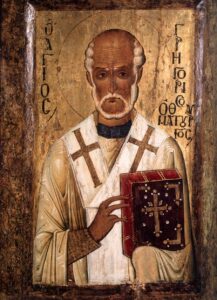
Origen was born in the city of Alexandria, Egypt, around 185 AD. His parents were Christian, and his father was killed during the persecution of Christians under the Roman Emperor Septimius Severus. This event, along with his mother’s dedication to the faith, strongly influenced Origen’s religious beliefs and shaped his future.

Origen of Alexander an Egyptian Christian theologian. His greatest work is the Hexapla, which is a synopsis of six versions of the Old Testament.

Origen was known for his incredible intellect and dedication to scholarship, studying under the philosopher Ammonius Saccas and later becoming a teacher of Christian theology and philosophy himself. He was a prolific writer, producing numerous works on theology, biblical commentary, and philosophy. One of Origen’s most significant contributions to Christianity was his systematization of Christian doctrine. He is often credited with introducing the allegorical interpretation of scripture, which became a standard approach in Christian theology.

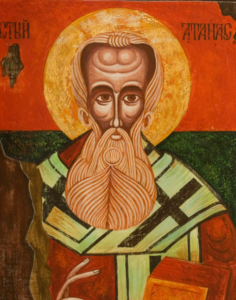
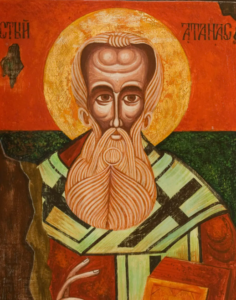
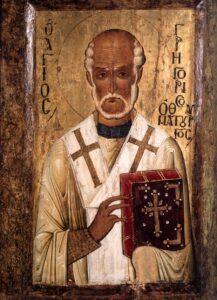
Athanasius of Alexandria an Egyptian Christian theologian, the chief proponent of Trinitarianism

Origen’s influence extended far beyond his lifetime. His ideas shaped the development of Christian theology and the understanding of scripture, and his work laid the foundation for the emergence of systematic theology in the Christian tradition. Origen’s legacy as a Christian scholar, theologian, and philosopher endures to this day, and his works continue to be studied and debated by scholars and theologians around the world.

St. Athanasius, also known Africa’s Influence on Christianity is profound, often overlooked as Athanasius of Alexandria, was one of the most prominent figures in early Christian history and theology. Born around 296 AD in Alexandria, Egypt, he became the Bishop of Alexandria and played a Continued on page 9 significant role in shaping Christian doctrine, particularly during the fourth-century Arian controversy.

The Arian controversy was a theological dispute centered around the nature of Jesus Christ. Arius, a Christian presbyter from Alexandria, taught that Jesus, as the Son of God, was a created being and therefore not equal to the Father in substance or essence. Athanasius vehemently opposed this view and argued that Jesus was of the same substance (homoousios) as the Father, an idea that eventually became the foundation of orthodox Trinitarian doctrine.

Athanasius’ commitment to this belief led to his exile from Alexandria multiple times by various Roman emperors who held Arian sympathies. Despite these challenges, he continued to defend the Nicene Creed and the orthodox understanding of the Trinity, making significant contributions to the development of Christian theology.

In addition to his theological writings, Athanasius is also remembered for his role in the canonization of the New Testament. In his Festal Letter of 367 AD, he listed the 27 books of the New Testament that are recognized by most Christian denominations today.Athanasius is revered as a saint in many Christian traditions, and his legacy continues to influence Christian theology and thought. He is often referred to as “the father of Orthodoxy” for his unwavering defense of orthodox Christian doctrine in the face of opposition and persecution.

The Coptic Orthodox Church in Egypt traces its roots to St. Mark, who is believed to have brought Christianity to Egypt in the first century. The Ethiopian Orthodox Tewahedo Church also has ancient origins, dating back to the fourth century. It is worth noting that Ethiopia is the only African nation to have never been colonized, and its Christian tradition is deeply rooted in its cultural identity.

Moreover, Africa played a critical role in the early church councils, which helped shape Christian doctrine. The Council of Nicaea in 325 AD, for example, was attended by bishops from across the Roman Empire, including Africa.

It is also important to recognize that the African Christian tradition has been distinct from its European counterpart. Christianity in Africa often incorporates indigenous cultural practices and beliefs. This can be seen in the vibrant liturgical music and dance of African churches or the practice of ancestor veneration, which some African Christians see as compatible with their faith.

The spread of Christianity in Africa was not solely the result of European missionaries. In fact, long before European colonization, African Christians were evangelizing their own communities. The expansion of Christianity in Africa is a complex and multifaceted story, influenced by indigenous traditions, African Christian leaders, and European missionaries.

Overall, the history of Christianity in Africa is a testament to the diversity and adaptability of the Christian faith. It shows how a religion that originated in the Middle East was able to take root and flourish in Africa, contributing to the rich tapestry of global Christianity.


Staff Writer

The influence of Africa on Christianity is profound and often overlooked. To understand this, we need to delve into the early history of Christianity.

Christianity was born in the eastern Mediterranean region, in what is today Israel/Palestine. From there, it spread rapidly across the Roman Empire, reaching Africa early on. North Africa, in particular, was a significant center for Christian thought and practice. Alexandria, in modern-day Egypt, was a major center of Christian scholarship, and influential thinkers like Origen and Athanasius lived and wrote there.

Origen was born in the city of Alexandria, Egypt, around 185 AD. His parents were Christian, and his father was killed during the persecution of Christians under the Roman Emperor Septimius Severus. This event, along with his mother’s dedication to the faith, strongly influenced Origen’s religious beliefs and shaped his future. 

Origen was known for his incredible intellect and dedication to scholarship, studying under the philosopher Ammonius Saccas and later becoming a teacher of Christian theology and philosophy himself. He was a prolific writer, producing numerous works on theology, biblical commentary, and philosophy.One of Origen’s most significant contributions to Christianity was his systematization of Christian doctrine. He is often credited with introducing the allegorical interpretation of scripture, which became a standard approach in Christian theology.

Origen’s influence extended far beyond his lifetime. His ideas shaped the development of Christian theology and the understanding of scripture, and his work laid the foundation for the emergence of systematic theology in the Christian tradition.Origen’s legacy as a Christian scholar, theologian, and philosopher endures to this day, and his works continue to be studied and debated by scholars and theologians around the world.

St. Athanasius, also known as Athanasius of Alexandria, was one of the most prominent figures in early Christian history and theology. Born around 296 AD in Alexandria, Egypt, he became the bishop of Alexandria and played a significant role in shaping Christian doctrine, particularly during the fourth-century Arian controversy.

The Arian controversy was a theological dispute centered around the nature of Jesus Christ. Arius, a Christian presbyter from Alexandria, taught that Jesus, as the Son of God, was a created being and therefore not equal to the Father in substance or essence. Athanasius vehemently opposed this view and argued that Jesus was of the same substance (homoousios) as the Father, an idea that eventually became the foundation of orthodox Trinitarian doctrine.

Athanasius’ commitment to this belief led to his exile from Alexandria multiple times by various Roman emperors who held Arian sympathies. Despite these challenges, he continued to defend the Nicene Creed and the orthodox understanding of the Trinity, making significant contributions to the development of Christian theology.

In addition to his theological writings, Athanasius is also remembered for his role in the canonization of the New Testament. In his Festal Letter of 367 AD, he listed the 27 books of the New Testament that are recognized by most Christian denominations today.Athanasius is revered as a saint in many Christian traditions, and his legacy continues to influence Christian theology and thought. He is often referred to as “the father of Orthodoxy” for his unwavering defense of orthodox Christian doctrine in the face of opposition and persecution.

The Coptic Orthodox Church in Egypt traces its roots to St. Mark, who is believed to have brought Christianity to Egypt in the first century. The Ethiopian Orthodox Tewahedo Church also has ancient origins, dating back to the fourth century. It is worth noting that Ethiopia is the only African nation to have never been colonized, and its Christian tradition is deeply rooted in its cultural identity.

Moreover, Africa played a critical role in the early church councils, which helped shape Christian doctrine. The Council of Nicaea in 325 CE, for example, was attended by bishops from across the Roman Empire, including Africa.

It is also important to recognize that the African Christian tradition has been distinct from its European counterpart. Christianity in Africa often incorporates indigenous cultural practices and beliefs. This can be seen in the vibrant liturgical music and dance of African churches or the practice of ancestor veneration, which some African Christians see as compatible with their faith.

The spread of Christianity in Africa was not solely the result of European missionaries. In fact, long before European colonization, African Christians were evangelizing their own communities. The expansion of Christianity in Africa is a complex and multi-faceted story, influenced by indigenous traditions, African Christian leaders, and European missionaries.

Overall, the history of Christianity in Africa is a testament to the diversity and adaptability of the Christian faith. It shows how a religion that originated in the Middle East was able to take root and flourish in Africa, contributing to the rich tapestry of global Christianity


Millennials Talk God

By Vince Robinson

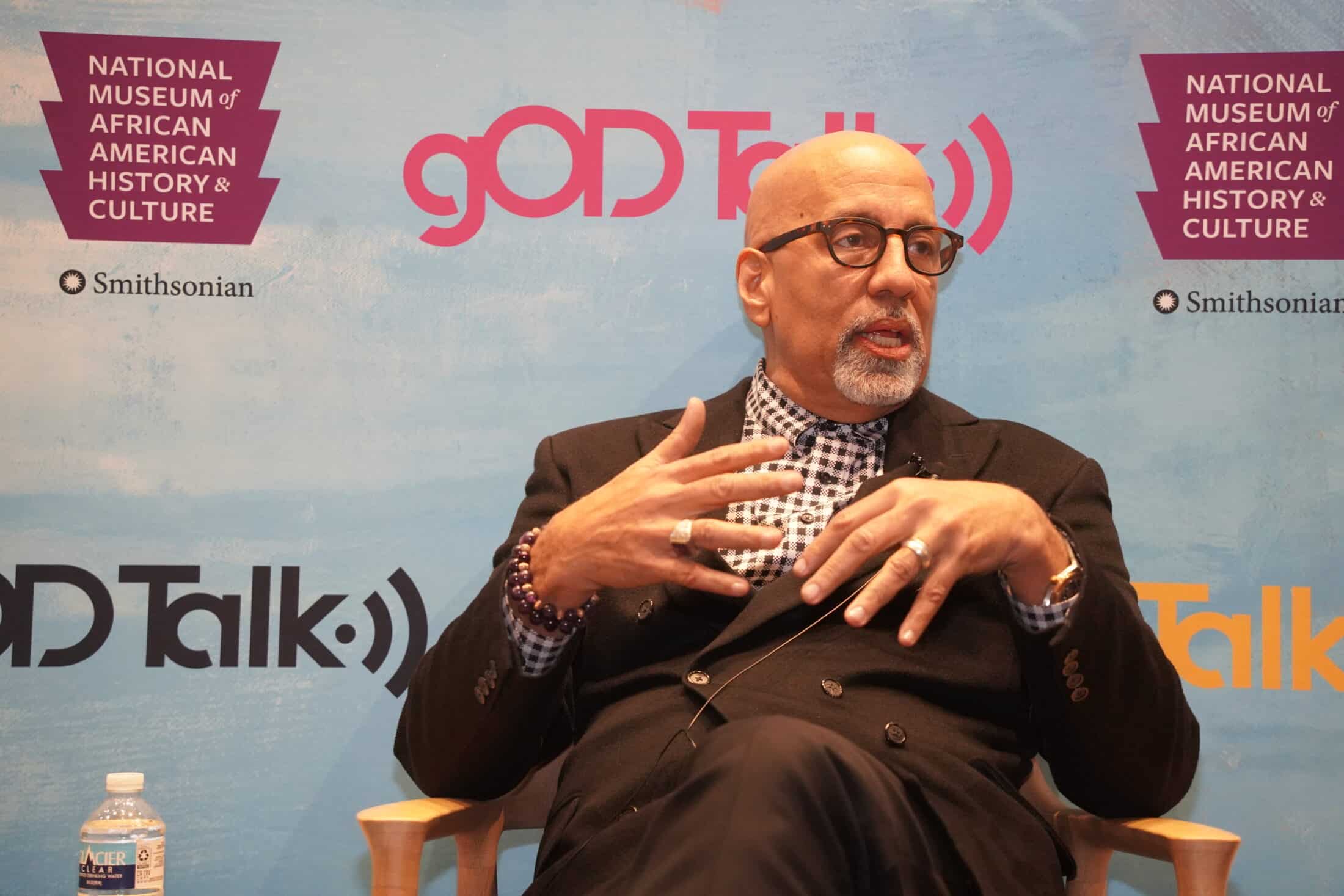
The African American Archives Auxiliary and African American Initiatives at the Western Reserve Historical Society partnered with the Smithsonian’s National Museum of African American History and Culture to present MLK, Movements, Millennials & More: A Celebration and Exploration of History As We Plan For The Future, a series of events staged in Cleveland in several venues from January 24-27.

The film God Talk was screened last Friday by the Greater Cleveland Urban Film Festival at CWRU’s Health Campus in connection with the National Museum of African American History & Culture, thanks to the vision of Dr. Regennia N. Williams, Distinguished Scholar of African American History and Culture at Western Reserve Historical Society and founder and director of The Rashad Center, Inc.

The film delves into the perspectives of a diverse group of interviewees from many different religious experiences as well as atheists/agnostics. Prominently featured in the film was Rev. Dr. Otis Moss III, son of Cleveland’s Rev. Otis Moss Jr. of the famed Olivet Institutional Baptist Church. The younger Moss is the senior pastor of Trinity United Church of Christ in Chicago, Illinois.

God Talk focuses on millennials, persons born between 1981 and 1996. The term was coined based on the idea they were the first generation to reach adulthood in the new millennium.

A talkback panel discussion featuring Dr. Teddy Reeves of NMAAHC, Heather Burton, Ph.d of CWRU, Reverend Paul Sadler Sr. of Mt. Zion Congregational UCC, and Reverend Brian A. Cash of East Mt. Zion Baptist Church followed the screening.


Rev. Brian A. Cash (far right) of East Mt. Zion Baptist Church elaborates.


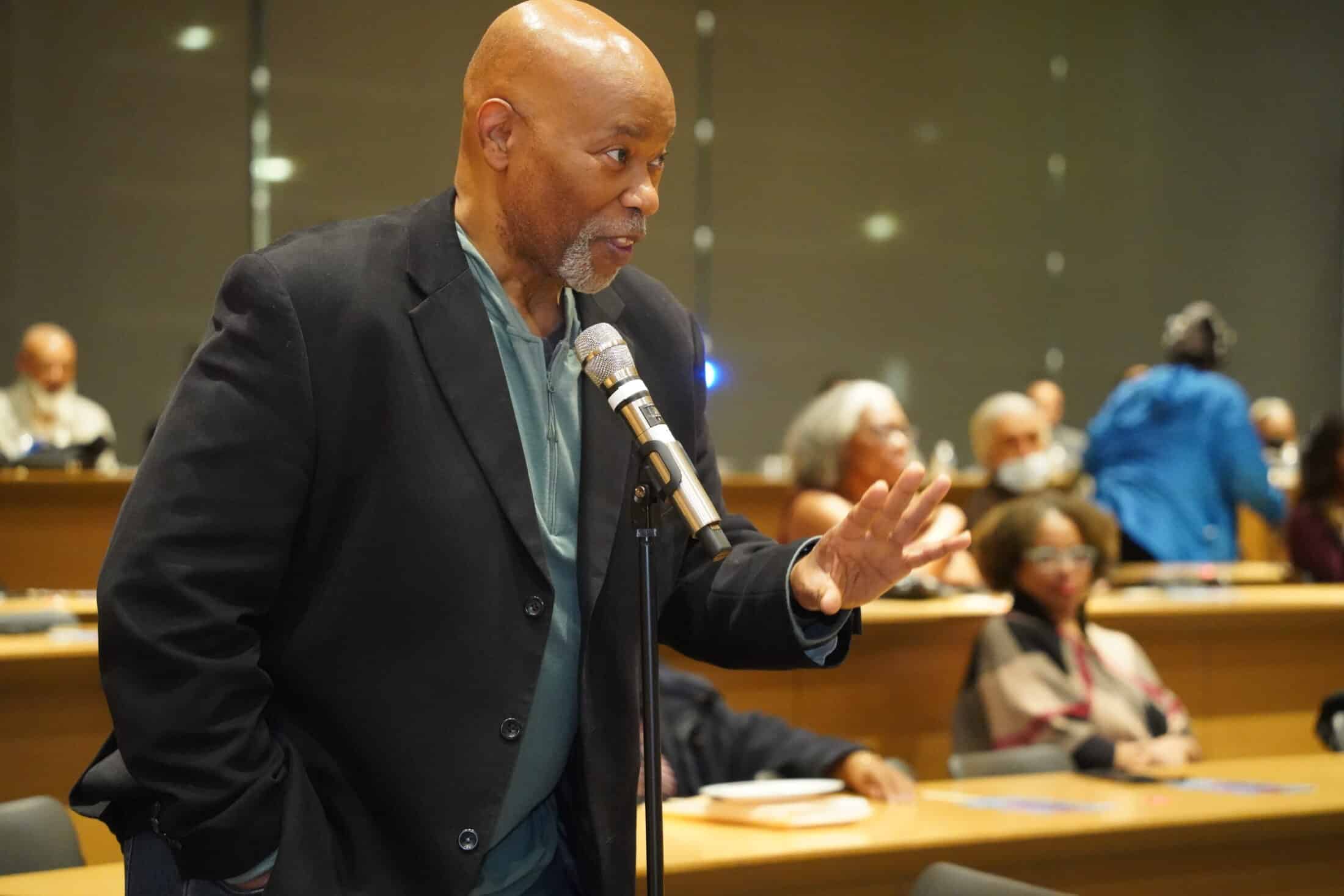
Clevelander Phil Davis poses a question to the panel.


{Caption for Photo 1:24}


{Caption for Photo 1:25}


{Caption for Photo 1:26}

Common Sayings from the Bible

by Larry Fraizier

If you have ever wondered where some of the sayings and expressions that have found their way into our language came from, then this article will investigate a few of them. It is no surprise that people of all ages have used colorful words to help convey the meaning of their thoughts. What is more enlightening is the fact that God is the originator of the sayings and they are recorded for us in the Bible.

“Put Your House in Order”

This expression is used by people to indicate the need to manage the property and affairs of their life because death is near. That is exactly what God said to King Hezekiah through the Prophet Isaiah in 2Kings chapter 20. Hezekiah started out as a faithful servant of the Lord, but later in life turned to activity that was not God-pleasing. Isaiah delivered God’s message to Hezekiah, “This is what the Lord says: Put your house in order, because you are going to die; you will not recover” (2Kings 20:1).

“The Root of the Matter”
“Nothing but Skin and Bones”
“By the Skin of Your Teeth”

These three expressions have their origin in the Book of Job. The Lord declared Job to be a righteous man. However, God sometimes allows trials and tribulations to enter our lives for the purpose of strengthening our faith and for the displaying of faithful, steadfast servants to a misinformed world. In his suffering Job is visited by religious friends whose understanding of the nature of God is questionable. Their attempts at comfort come forth more like accusations and indictments against Job, accusing him of not being as righteous as he thought. In chapter 19, verse 28, Job warns his friends about their comments saying, “The root of the matter lies in him.” In other words, they believe that Job’s troubles are his own fault. Job and his so-called comforters wrangle back and forth as they challenge his knowledge of God and how God works among his people. In his affliction Job has lost a lot of weight, but he continues to fight back trying to hold on to his faith in God. He said in chapter 19, verses 19-20, “All my intimate friends detest me; those I love have turned against me. I am nothing but skin and bones; I have escaped with only the skin of my teeth.” Job knows that he is holding on to life and faith by the thinnest of margins. Yet despite the intense attacks of his friends God keeps Job close through some needed correction and eventual full restoration.

These sayings from the Bible are enduring because they can be traced back to our Real and Loving God acting in the lives of real people.

Pastor Larry Frazier

Photo from Pexels.com Credit: Kindel Media


{Caption for Photo 1:24}


{Caption for Photo 1:25}


{Caption for Photo 1:26}

Preaching and Faith Are Connected

By Larry Frazier

Preaching is one of the major things that church attendees talk about—some people make their choice of church membership contingent on the preaching.
Resultantly, the preaching task for a pastor is not to be taken lightly. We are reminded of the importance
of preaching in Romans 10:14-15, “And how can they believe in the one of whom they have not heard? And how can they hear without someone preaching to them? And how can anyone preach unless they are sent?”

Sermon preparation must first begin with confession of your own sins and faults. That is good advice not only for a pastor, but for anyone preparing a presentation of the Word of God. After all, Jesus Christ said, “And whoever exalts himself will be humbled, and he who humbles himself will be
exalted” (Matthew 23:12).

Worshippers often express the sentiment of whether or not they were fed by what they heard in the sermon. If their receiving attitude was guided by the Holy Spirit, then that comment would have merit. Spiritual feeding can be however the Holy Spirit wants to serve it. It does not have to be how itching ears want to hear it, but rather how the Holy Spirit has prepared the message and the preacher. Doctor Martin Luther, the Reformer, said, “To preach Christ is
to feed the soul, to justify it, to set it free, and to save it, if it believes the preaching.”

I have heard pastors say that sermon preparation is a 24/7 exercise – you are always thinking about your next sermon. Current events don’t always have a place in a sermon, but sometimes they find application in the Scripture readings. A pastor’s eyes are always looking and the ears are always listening. The Rev. Vance Havner said, “The task of the preacher is to comfort the afflicted and afflict the comfortable.”

The same words that Jesus used to teach His disciples are advised for us as well: He said t them, “Therefore every teacher of the law who has become a disciple in the kingdom of heaven is like the owner of a house who brings out of his storehouse new treasures as well as old” (Matthew 13:52).

Jesus is saying to let the wealth and revelation from the Old and New Testaments – the totality of scripture, be your guide and teacher. The preacher is to be
grounded solely by faith, scripture, Christ, and grace.

Preaching and faith are connected in the life of the pastor of a congregation. As they serve the souls entrusted to them with the word and sacrament, may they remember these words from an unknown writer, “You preach a better sermon with your life than you do with your lips.”

God Uses Small Things

By Pastor Larry Frazier

The movie “Oppenheimer” showed that the microscopically small atom can release enormous power. God allows man to have knowledge of such power that can either be used constructively and destructively. However, the knowledge of atomic power was not from man’s discovery. God says, “He gives wisdom to the wise and knowledge to the discerning. He reveals deep and hidden things.” (Daniel 2:21-22). The atom is only one of the small things empowered by God that He uses according to His purpose.

Goliath vs David, courtesy of Pixabay

David, a young boy who attended sheep, went to fight a physically larger, trained warrior named Goliath (1 Samuel 17). That incident would have ended tragically for David if God had not been in the picture. David had the fortitude to oppose a formidable enemy of God’s people despite overwhelming odds against him. 

Frederick Douglass is credited with saying, “One and God make a majority.” Indeed, that was the case, because David’s one small rock from his sling felled the giant Goliath. God’s mighty little rock brought victory. In the thirteenth chapter of Matthew’s Gospel, we read where Jesus compares the growth of God’s kingdom initially to a small mustard seed which eventually grows to be the largest of the garden plants. Jesus was predicting the spreading of Christianity throughout the world. Going further, some find it hard to believe that Jesus fed more than five thousand people by multiplying five loaves and two fish (Matthew 14:15-21). The writer of Psalm 135:6 says, “The Lord does whatever pleases him, in the heavens and on the earth.”

An excellent example of something small and powerful is the tongue. Somebody once said that all parts of the human body get tired eventually except the tongue. In chapter three of his epistle, the Apostle James wrote, “Look at the ships also, though they are so great and are driven by strong winds, are still directed by a very small rudder …so also the tongue is a small part of the body, and yet…also the tongue is a fire, a world of evil among the parts of the body. 

The Apostle Paul tells how God handles the tongue. “Let your conversation be always full of GRACE…so that you may know how to answer everyone” (Colossians 4:6). Grace is God’s gift that we receive through faith in Jesus Christ. The fallen human nature desires power and position rather than humility toward God. Paul reminds us, “But God chose the foolish things of the world to shame the wise; God chose the weak things of the world to shame the strong. God chose the lowly things of this world and the despised things – and the things that are not – to nullify the things that are, so that no one may boast before him” (1 Corinthians 1:27-29).

So, ultimately we see that the greatest example of God’s power in small things is the Babe of Bethlehem, Jesus Christ. The Prophet Micah foretold of Jesus’ coming from humble lineage, “But you, Bethlehem Ephrathah, though you are small among the clans of Judah, out of you will come for me one who will be ruler over Israel, whose origins are from of old, from ancient times (5:2). “And Jesus [the Savior] grew in wisdom and stature, and in favor with God and man” (Luke 2:52).

God Patiently Teaches with History

by Larry Frazier

The act of waiting is not something we do very well. Scientists have said that impatience speeds up the aging process in our bodies. God, however, patiently does infinitely more for us than we can do for ourselves, and He teaches us with our history.

People in past generations had nowhere near the conveniences that we have today. There are some things that we can have instantly—no waiting required. Technology allows us to communicate around the world with the push of buttons. Travel by air is supersonic and speedy travel on the ground uses horsepower on wheels rather than horsepower on four animals’ legs. Yet, with all these advancements, we still allow stress and impatience to rob us of health and peace.

Concerning human troubles, King Solomon says, “There is nothing new under the sun and all things are wearisome” (Ecclesiastes 1:8-10). Solomon’s words are worth taking to heart because God gave him wisdom that exceeded all the people of his time (1 Kings 4: 29-34). Indeed there is nothing new under the sun. There are examples of human behavior from ancient times that are still going on today. People don’t trust God all the way—that started with Adam and Eve. 

Family members become jealous of each other and react violently even to the point of death—the children of Adam and Eve. Sexual immorality permeates society—Sodom and Gomorrah. People break promises made to God and man—Ananias and Sapphira.

Human behavior hasn’t changed over the centuries. In cases where we fully understand God’s directions for us, we allow anger to take us off course. Consider Moses, God’s appointed leader of the people. In anger and frustration at the people’s grumblings, Moses disobeyed God’s command to speak to the Rock that would provide water. Instead, Moses struck the Rock (a presence of Jesus Christ) and incurred God’s anger. 

Hourglass and open bible symbolizing the end times according to the Holy Bible. Time is running out.

In our impatient world today we are also guilty of taking matters into our own hands rather than waiting for God. Sometimes people become angry and disappointed at the actions of others and if we are not careful, we can do great harm, road rage for instance. Patience is one of God’s gifts to His people through the Holy Spirit (Galatians 5:22-23). If there is a need for an offense to be corrected then trust the Lord for guidance. God’s teaching comes in Proverbs 3:5-6, “Trust in the Lord with all your heart, and lean not on your own understanding; in all your ways acknowledge Him, and He will direct your paths.”

In the Bible, the life of Jonah is a striking example of what the human spirit will do. Jonah was given a clear mission from God. He was told to go and preach a message of salvation to the people of Nineveh. Thinking that they were not worthy of God’s blessing, Jonah attempted to flee from his assignment and God. Of course, God tracked Jonah down and sent him through some trials for correction before commissioning him a second time to go to Nineveh. Jonah went, fulfilled his mission and God’s will was done for the people. Jonah, however, remained a reluctant servant. God’s patience with mankind is seen so prominently in the life of Jonah. We are so thankful that God is patient with us as well. The Scriptures tell us that if God held our unrepented sins against us, we would perish (Psalm 130:3). Every Christian needs to be reminded, “For we are God’s handiwork, created in Christ Jesus to do good works, which God prepared in advance for us to do” (Ephesians 2:10). Let us remember, “For it is God who works in you to will and to act according to His good purpose” (Philippians 2:13).

Samson, the strong man in the Bible, was a slave to his passions. Samson is not alone in that, forever since the original sin corrupted our human nature the words of Galatians 5:17 ring true, “For the desires of the flesh are against the Spirit and the desires of the Spirit are against the flesh.” As in the case of Samson, sometimes a person has reached rock bottom before repentance can do its work. King Solomon says, “Better is the end of a thing than its beginning” (Ecclesiastes 7:8). God heard Samson’s prayer for forgiveness and granted him one last act of service against the enemies of the Kingdom.

We have a God who is merciful, forgiving, and faithful. He keeps His promises made and carried out through His son Jesus Christ Our Savior. God has everything at His disposal to patiently save, help, and teach us. The Apostle Paul brings a word from God, “For everything that was written in the past was written to teach us so that through the endurance taught in the Scriptures and the encouragement they provide we might have hope” (Romans 15:4). Paul further says in Romans 5:5, “And hope does not disappoint, because the love of God has been poured out within our hearts through the Holy Spirit who was given to us.”


Let There Be Peace on Earth

By Pastor Larry Frazier

In 1955, Jill and Sy Miller wrote a song entitled “Let There Be Peace on Earth.” Those words are the prayers of many people in the world today. From the beginning of time, however, peace has been on God’s mind for His creation. Besides the fact that rumors of war have developed into full-grown conflicts in some parts of the world, God still reminds mankind: “If it is possible, as far as it depends on you, live at peace with everyone,” (Romans 12:18).

Photo by Priscilla Du Preez (Unsplash)

Sin and conflict came into the world long ago when Adam and Eve disobeyed God in the Garden of Eden. Their lack of trust and subsequent action destroyed peace and plunged all human beings who have come after them into sin, death, and separation from God. In Jesus’ Sermon on the Mount recorded in Matthew chapter 12, He said, “Blessed are the peacemakers, for they will be called children of God.” Throughout history, God has raised peacemakers to help soothe volatile situations.

In Genesis chapters 37-50, we read about Joseph, the peacemaker. When Joseph’s brothers were angry and jealous, he sought peace with them for the sake of the family and the nation. In 1st Samuel 19:1-7, we read where Jonathan, the son of King Saul sought to make peace between his father and David, the rising, soon-to-be anointed king. In the letter to Philemon, a slave owner, the Apostle Paul challenged the social structure by contending for peace and brotherly acceptance between Philemon and Onesimus, a runaway slave. In Matthew chapter 27, Jesus was brought before Pontius Pilate for judgment. Although she said it from selfish concerns, Pilate’s wife advised him “To have nothing to do with that righteous man [Jesus].”

Photo courtesy of Pixabay

Peace in all of its expressions is directed by God. There is, however, a difference between worldly peace and godly peace. Jesus said in John 14:27, “Peace I leave with you; MY peace I give you. I do not give to you as the world gives.” Paul further explains in Romans 5:1, “Therefore, since we have been justified by faith, we have peace with God through our Lord Jesus Christ.” Through faith in Jesus Christ we are restored to peace with God the Father and through the work of the Holy Spirit within us we can show love and peace to one another. “We love because He [God] first loved us,” (1 John 4:19).

If peace on all levels seems to be missing in the world today, Martin Luther explains, “The just enjoys peace with God but suffers distress from the world because he lives in the spirit. The unjust enjoys peace with the world but suffers distrust and tribulation from God because he lives in the flesh,” (What Luther Says, Concordia Publishing House, 1959).

As we approach the holiday season, we are thankful for the love and peace of God that He has provided, “For to us a child is born, to us a son is given, and the government will be on his shoulders. And he will be called Wonderful Counselor, Mighty God, Everlasting Father, the Prince of Peace” (Isaiah 9:6).